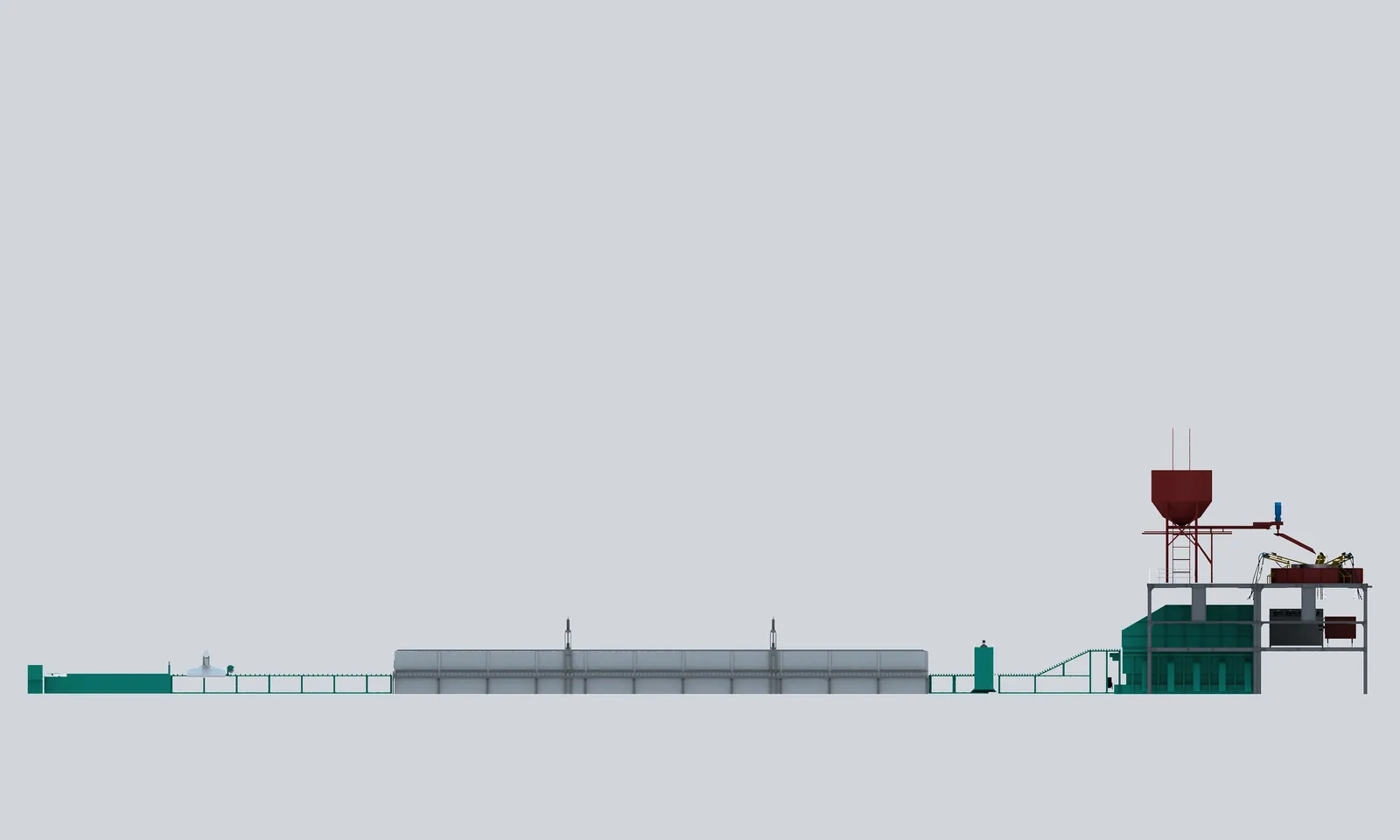
From melting furnace to finished product packaging — we design, manufacture, install, and commission full production lines for ceramic fiber blankets, boards, modules, and more. Turn-key delivery to 30+ countries.
Eight specialized product lines covering the full range of ceramic fiber insulation products

Complete needle-punched blanket production from raw material to rolled product.
View Details →
Rigid board forming, drying, and cutting for high-temperature insulation panels.
View Details →
Bulk fiber production with spinning or blowing technology for loose-fill insulation.
View Details →
Lightweight flexible felt for wrapping, gasketing, and thermal barrier applications.
View Details →
Folding and compression equipment for furnace lining modules and edge-grain blocks.
View Details →
Lamination line for aluminum foil backed blankets used in HVAC and building insulation.
View Details →
Vacuum forming and CNC machining for custom ceramic fiber shapes and components.
View Details →
Wet-laid paper production for thin, flexible high-temperature gasketing sheets.
View Details →One melting and fiberising stage feeds every downstream product you can sell
Ceramic fiber — more precisely, alumina-silicate refractory fiber — is made by melting a blend of alumina and silica at roughly 2000°C and converting the molten stream into fiber. Everything else in the plant is downstream of that single step. Understanding the chain matters because it decides what you can profitably make and in what order you should invest.
Stage one is melting. An electric arc or resistance furnace holds the melt at temperature. Electrical energy is the dominant operating cost of the whole plant, typically around 1.0–1.6 kWh per kilogram of fiber, which is why furnace design and continuous operation matter more to your margin than almost anything else on the line.
Stage two is fiberising. The melt stream is either thrown off high-speed spinning rollers or attenuated by a high-velocity jet. Spinning yields longer, finer fiber with low shot content and is the route to higher-grade products; blowing is cheaper to install but produces shorter, shot-heavier fiber. This single choice sets a quality ceiling on every product downstream.
Stage three is conversion. Bulk fiber is then formed into whatever you sell: needled into blanket, wet-formed into board, wet-laid into paper, folded and compressed into modules, vacuum-formed into shaped parts, or laminated into foil-faced products.
This is why we size the cotton line first. If melting and fiberising capacity is wrong, no amount of downstream equipment will fix your cost per ton — and retrofitting furnace capacity around live equipment is the most expensive kind of expansion there is.

We don't just sell machines — we deliver a complete production capability
From factory layout design to equipment installation and commissioning — we handle everything. Your line is ready to produce from day one.
Spare parts supply, remote troubleshooting, operator training, and production optimization support throughout the entire life of your equipment.
Our engineers travel to your factory to train your team on operation, maintenance, and quality control until they are fully independent.
Every line is tailored to your raw materials, target capacity, product specifications, and local conditions. No cookie-cutter solutions.
PLC + SCADA integration with remote monitoring capability. Track production data, energy consumption, and equipment health in real time.
Over 100 production lines running in 30+ countries across Asia, Africa, Middle East, and South America. References available on request.
Real production lines delivered and running for our customers worldwide
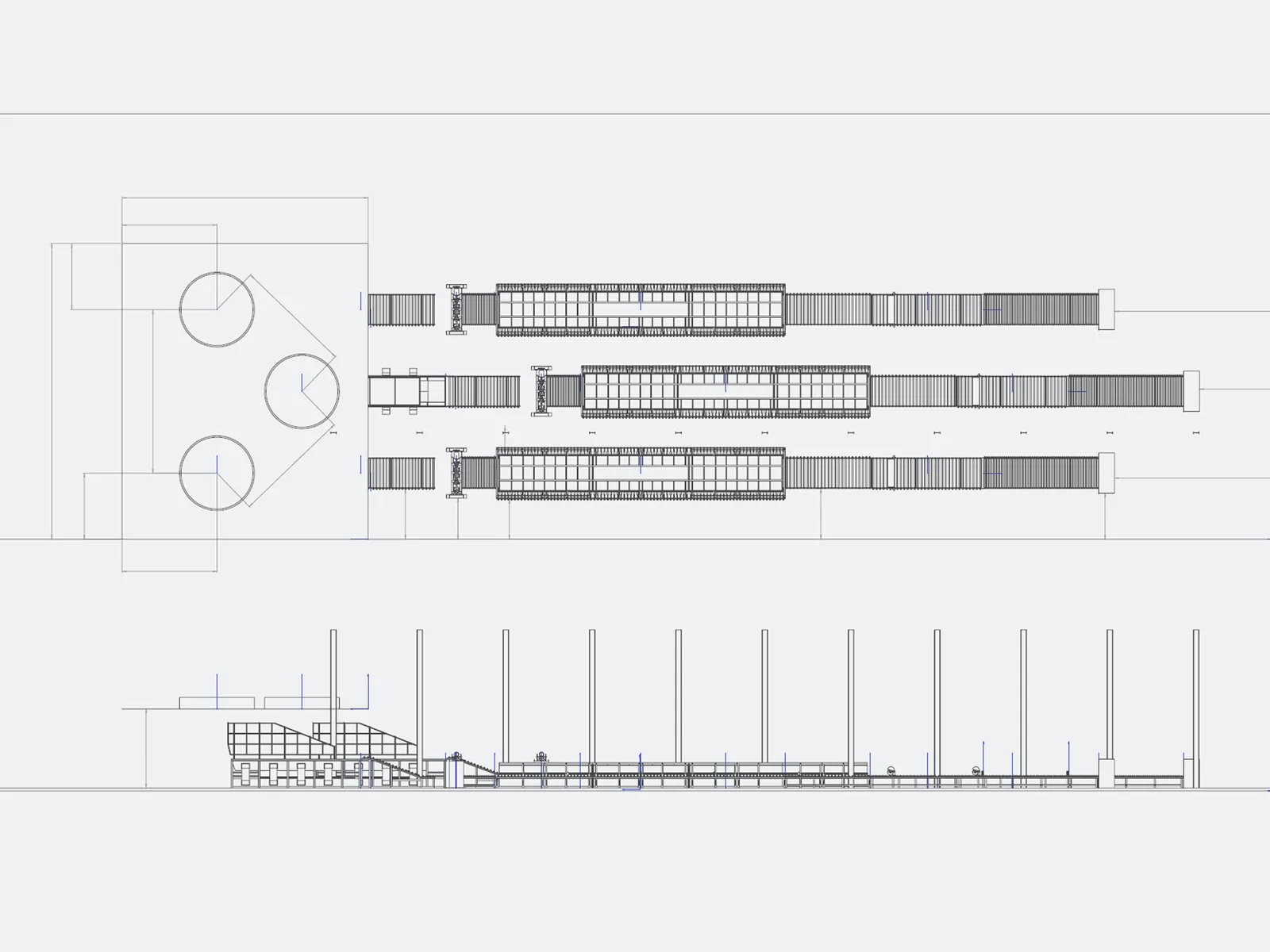
A full ceramic fiber plant integrating a needle-punched blanket line, a wet-formed board line and module equipment, sized for 5,000 tons of annual output. Jinyuan supplied the complete process design, manufactured all core machinery and supervised installation through to rated-capacity acceptance.
"They delivered the whole plant, not just individual machines. Startup was smooth and the line reached design capacity faster than we budgeted." — Operations Director, Middle Eastern refractory producer
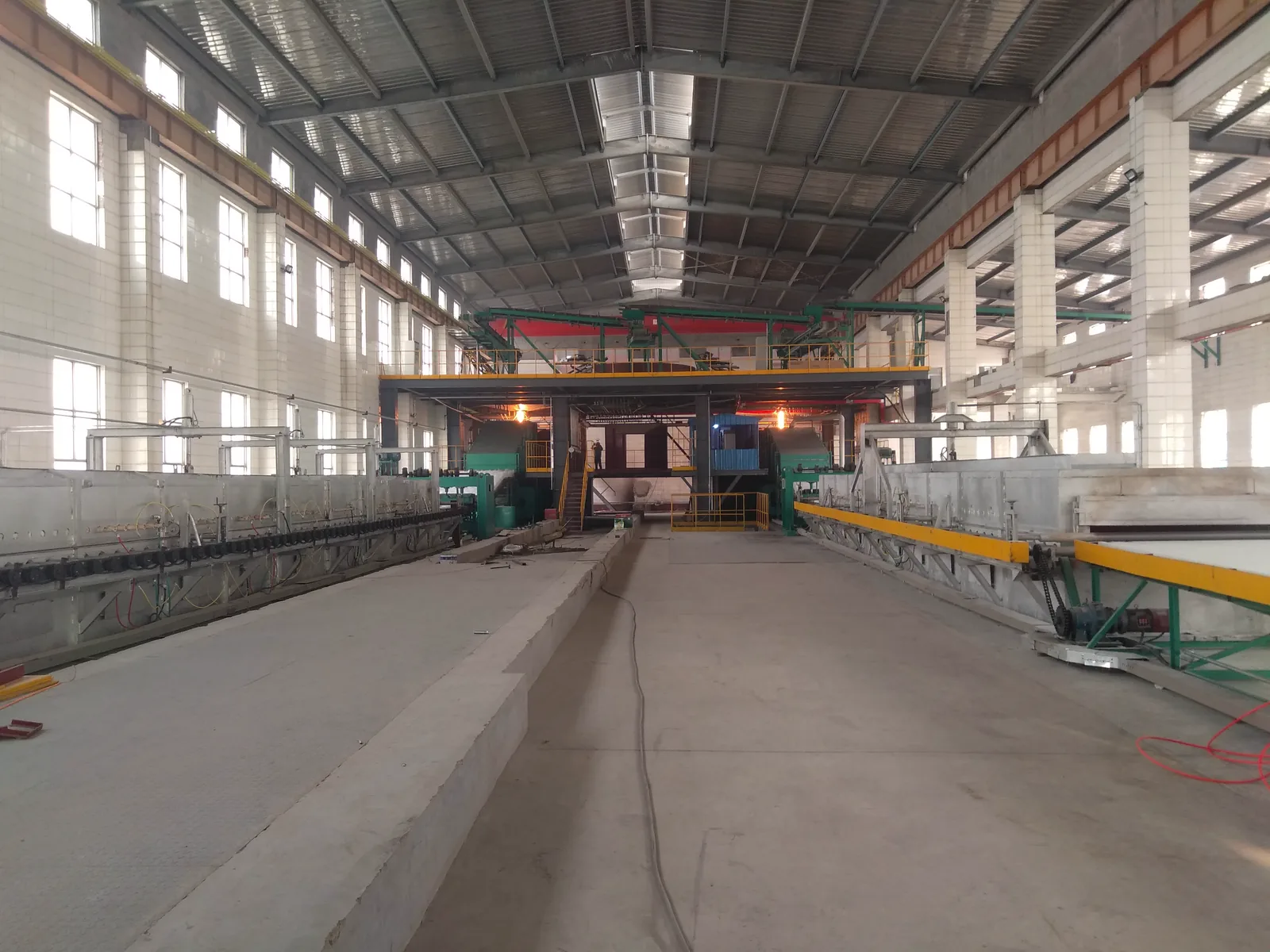
High-speed needle-punched blanket line with automated cross-cutting and packaging. The double-board needle loom runs at roughly 130 strokes per minute on a 50 Hz supply, delivering consistent density across the full width with low needle breakage.
"Since commissioning in 2019, the needling section still holds its density tolerance. Spare parts arrive when we ask." — Plant Manager, domestic blanket manufacturer
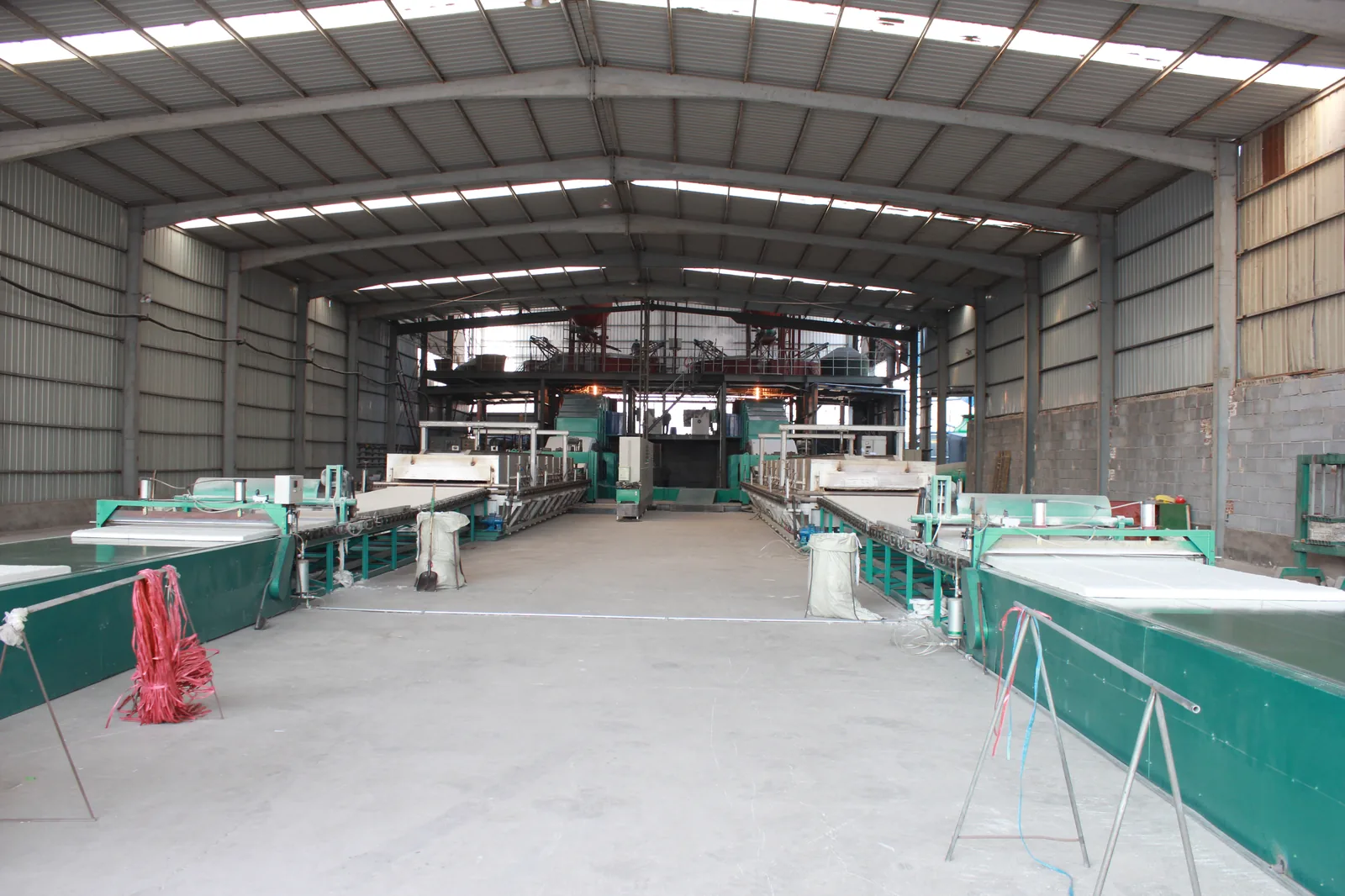
Complete mechanical installation, electrical hook-up, commissioning and operator training delivered on-site in 45 days. Local operators and maintenance staff were trained to run the line independently, with remote diagnostics available around the clock afterward.
"Our team took over the line on schedule and has run it without a return visit. The documentation is genuinely complete." — Managing Director, Southeast Asian insulation producer
What buyers ask before investing in a ceramic fiber production line
Tell us your target product, capacity, and budget — we'll design the right line for you.
Get Your Free Consultation