
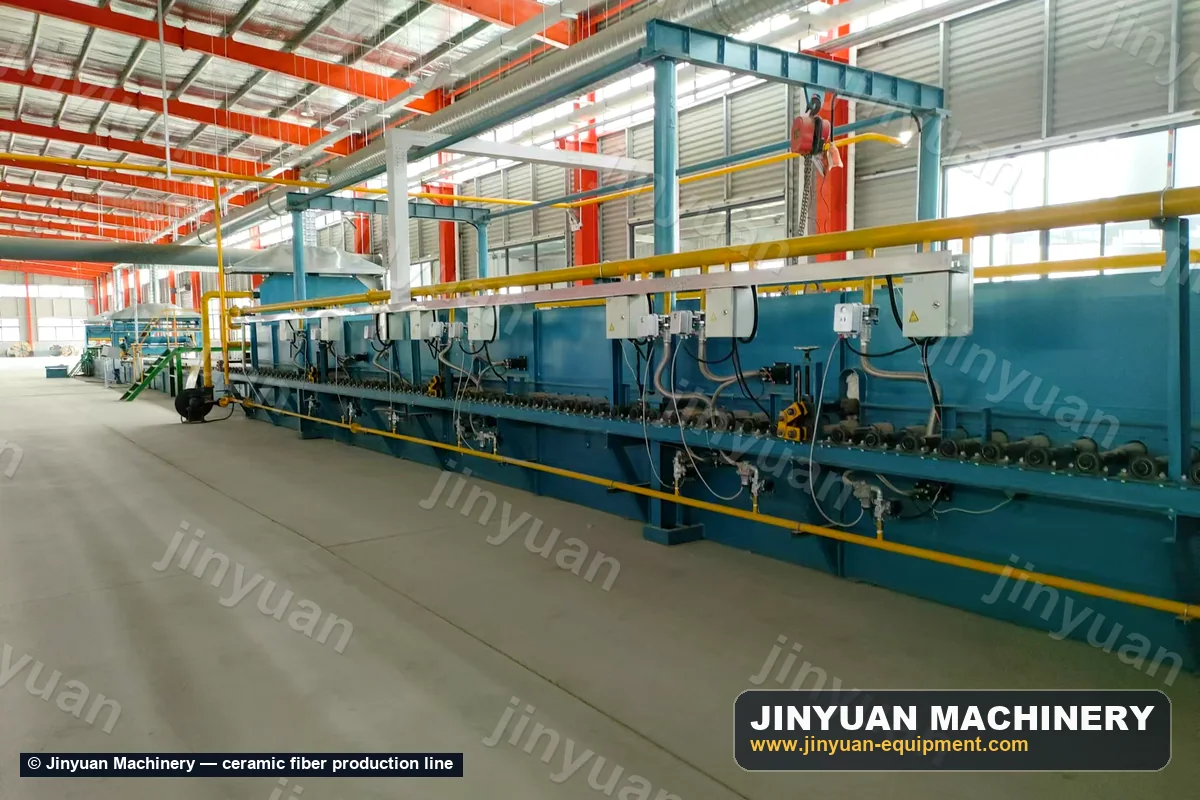
Complete needle-punched blanket manufacturing — from raw material melting to rolled finished product
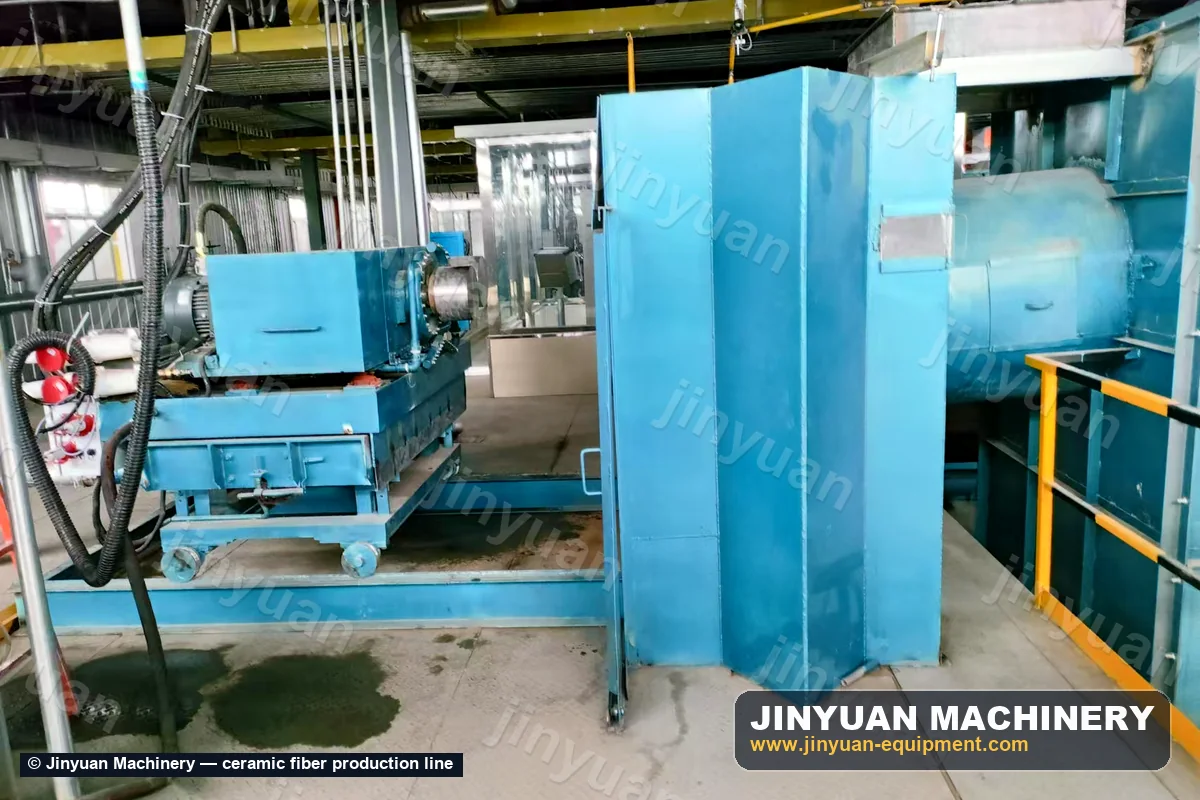
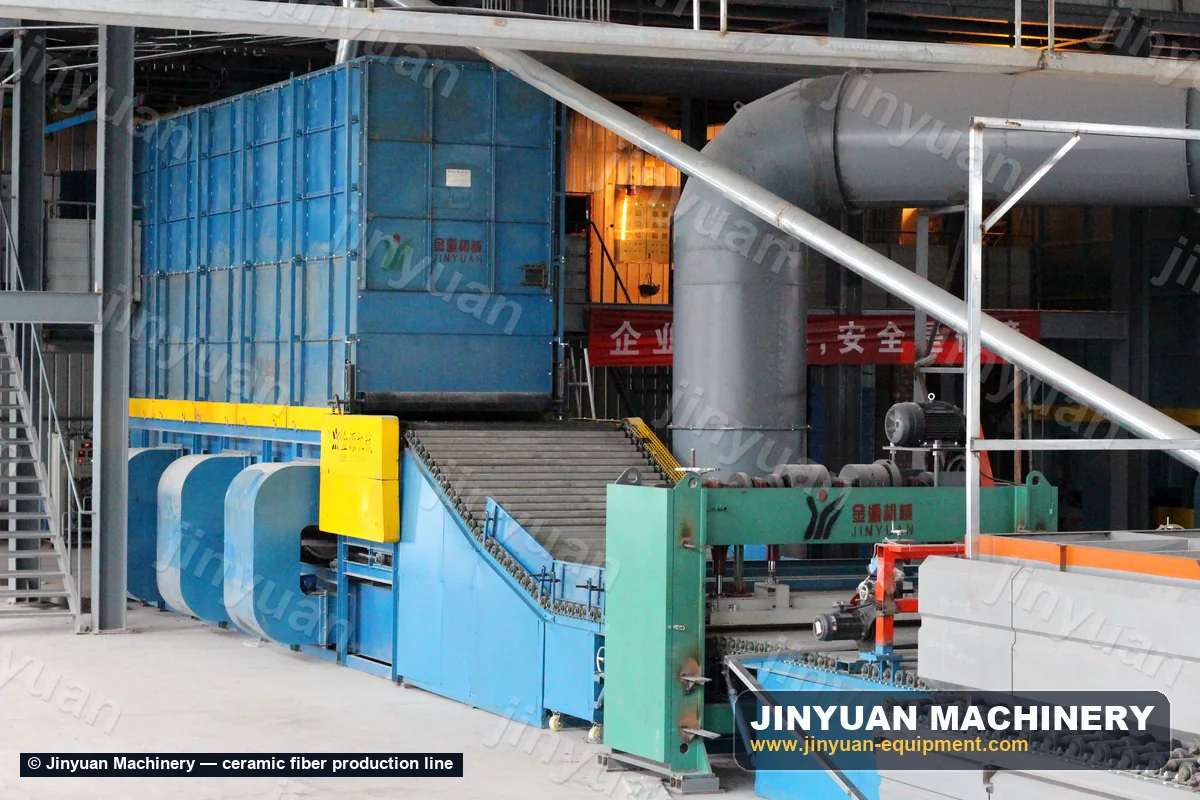
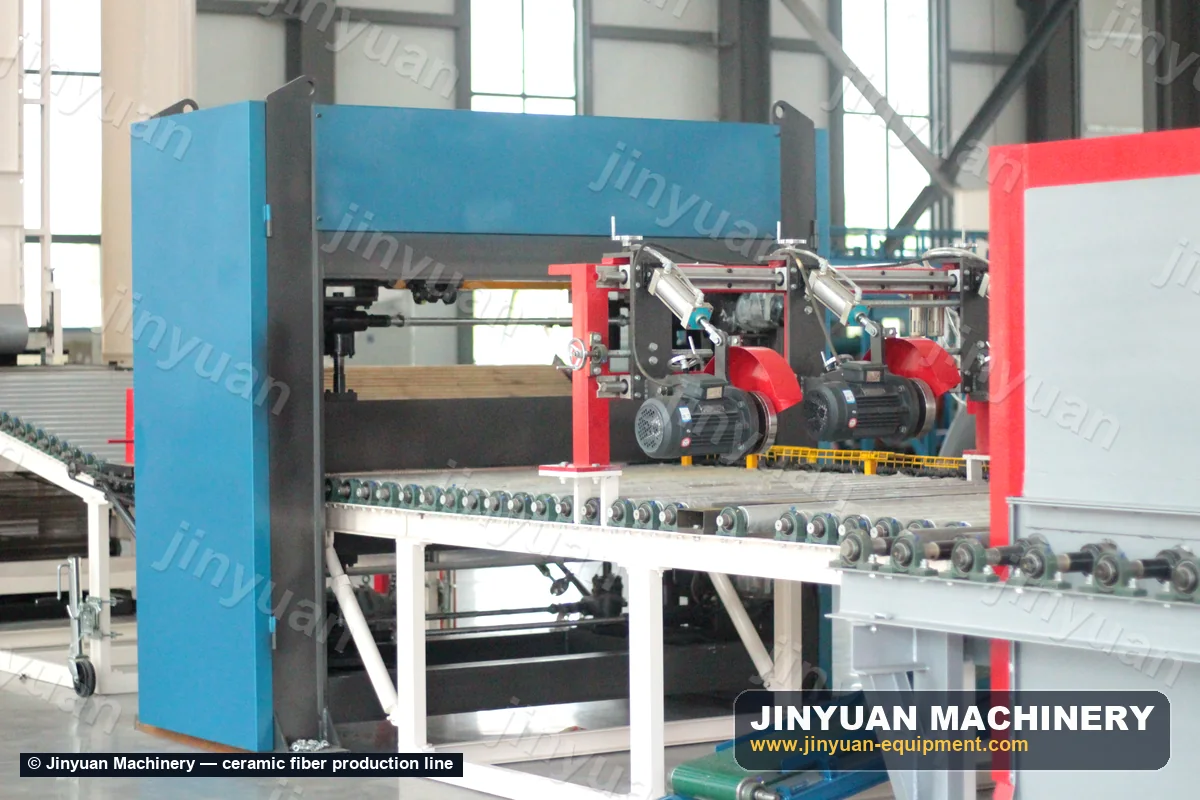
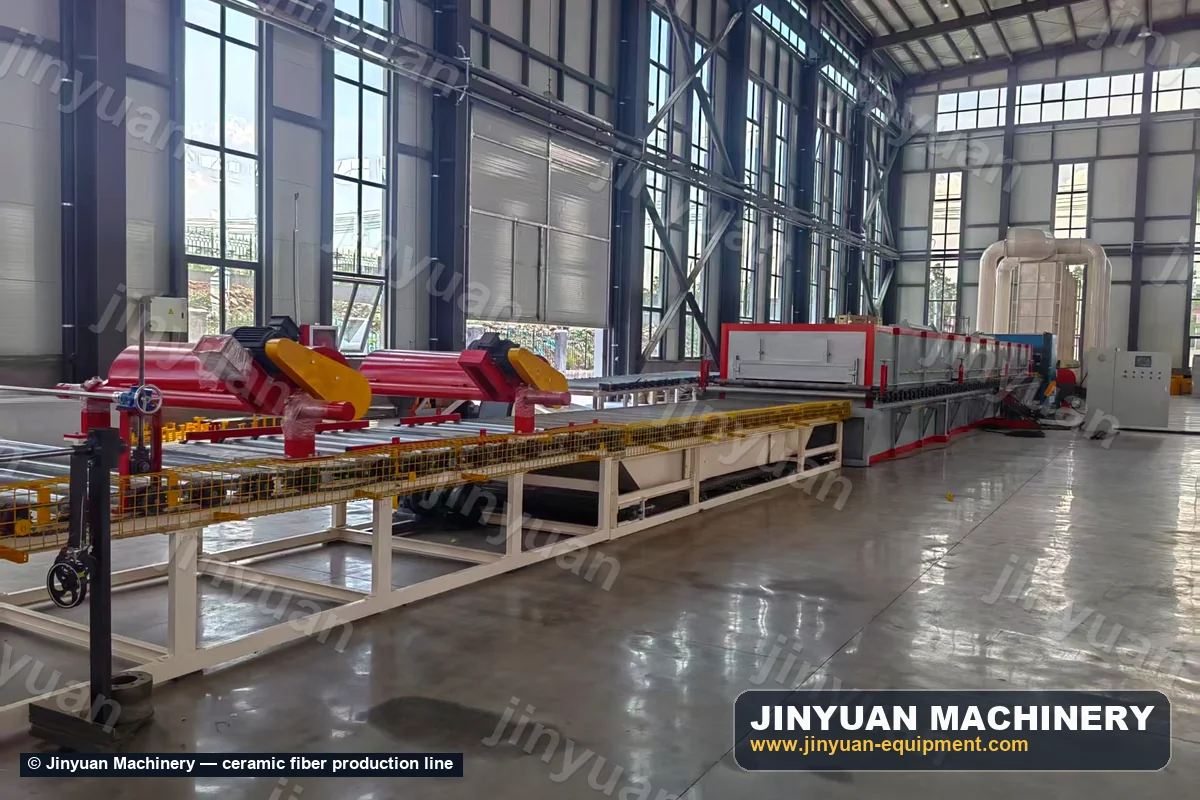
Jinyuan designs and manufactures continuous ceramic fiber blanket production lines, from raw material batching and resistance melting to binder-free needle punching and finished roll packing.
The standard spun route uses a water-cooled, two-roller spinning machine and negative-pressure fiber collection. Share grade, finished width, thickness, density and annual tonnage so the melting, fiberizing, needling and curing stations can be sized together.
Compare line configurations · See the eight process stations · Review supply and acceptance
| Annual capacity | 3,000–10,000 t/year, configuration dependent |
|---|---|
| Classification temperature | 1260 / 1350 / 1430 °C |
| Working width | 1,220 or 1,830 mm; custom widths available. Confirm finished roll width after slitting. |
| Blanket thickness | 6–50 mm |
| Finished bulk density | 64–160 kg/m³ |
| Spun fiber diameter and shot | 2–5 μm; shot content <15% for spun fiber |
| Finished moisture | <1% |
| Melting furnace | Water-cooled resistance furnace; reference rated power 1,000–4,500 kW |
| Fiberizing | Two-roller centrifugal spinning |
| Needling | Double-board with graded needles; approximately 130 strokes/min at 50 Hz, maximum 180 strokes/min on the brochure configuration |
| Curing | Multi-zone tunnel; electric or gas heating |
| Line speed | Up to 3.5 m/min, subject to product and setup |
| Controls and power | PLC + HMI; installed power and supply sized to the project |
| Reference floor area | 1,200–2,000 m² |
| Delivery and schedule | Turnkey, EPC or customized. Brochure schedule: manufacturing within 90 days; 30–45 days of on-site installation and commissioning. Confirm scope, shipping and site readiness in the proposal. |
Finished roll specifications: List the grades, roll widths, thicknesses and densities you plan to sell. Include the annual tonnage for each major specification and the shifts you plan to run.
Plant and supply limits: Share your raw material analysis, available electrical capacity, cooling water and workshop dimensions. This helps size the melting, fiberising and needling sections for the same output target.
Scope and acceptance: State which equipment you already have and which services to include, such as installation supervision, commissioning or training. Use the supply and acceptance checklist to define what the quotation needs to cover.
How a ceramic fiber blanket production line runs from raw material to finished product
Where the output of this line is used
Hot-face and backup insulation for heat treatment furnaces, forging furnaces, reheating furnaces and ceramic kilns.
Lining for reformers, cracking furnaces and process heaters where thermal shock resistance is critical.
Duct, boiler wall and expansion joint insulation in power generation and waste incineration plants.
| 1,220 or 1,830 mm working width | Start with the finished roll widths you sell. Ask for a slitting layout that shows how many rolls can run side by side and how much edge trim is needed. |
|---|---|
| Fiber quality | Specify the required fiber grade, fiber diameter and shot content with the finished blanket specification. These requirements guide the two-roller spinning setup and the checks at acceptance. |
| Electric or gas curing | Choose the heating option using available electrical capacity or gas supply. Ask for the proposed curing settings and utility requirements for the grades you plan to run. |
Compare quotations against the same roll mix and operating calendar. Ask for saleable output per shift and the planned running hours behind the annual tonnage. The brochure's maximum line speed of 3.5 m/min is a separate specification.
Equipment and services: Confirm the stations included from batching through packing, and who is responsible for plant layout, installation support, commissioning and operator training. If you already have equipment, identify where the new line connects to it.
Site responsibilities: Request an equipment list and a utilities schedule covering electrical supply, cooling water, fuel where required, ventilation and building clearances. Agree who prepares each connection before the equipment arrives.
| Test conditions | Agree the raw materials, roll grade, dimensions and density, run duration, sampling points and pass criteria before testing. |
|---|---|
| Accepted output | Weigh finished rolls that pass inspection. Record saleable dry mass, trim and rejected rolls separately over the agreed run. |
| Roll quality | Check width and length after cutting. Sample thickness and density across the width and verify finished moisture using the agreed methods. |
| Energy use | Agree which equipment and utilities are inside the measurement boundary. If energy is part of acceptance, report metered electricity and fuel separately per tonne of accepted dry blanket. |
Send your blanket line requirements to confirm the supply scope and acceptance conditions in the quotation.
Common questions before ordering a ceramic fiber blanket production line
Other production lines we build
Technical guides and buyer resources
Send us your capacity requirement and product specifications for a tailored proposal.
Get a Free Quote