
Ask five ceramic fiber producers what changed in their market over the last few years and you get five versions of the same four answers: the machines got smarter, the customers got stricter, the electricity bill became a licence to operate, and the export paperwork became a product feature. This page puts those four shifts in one place with the public numbers behind each — and then does the part most market commentary skips: it translates every shift into a line on your equipment specification.
On sourcing, one rule before any figure. Market shares and demand splits below come from public industry analyses compiled in 2025–2026 (industry analysis); the energy limits from the Chinese national standard GB 40877-2021 (national standard); the export rules from the published substance restrictions of REACH and from ASTM acceptance practice (regulation summary). Where we add our own view from building and commissioning lines we label it field practice. Shares and splits carry a shelf life; read them as direction, not as a forecast anyone can bank on.
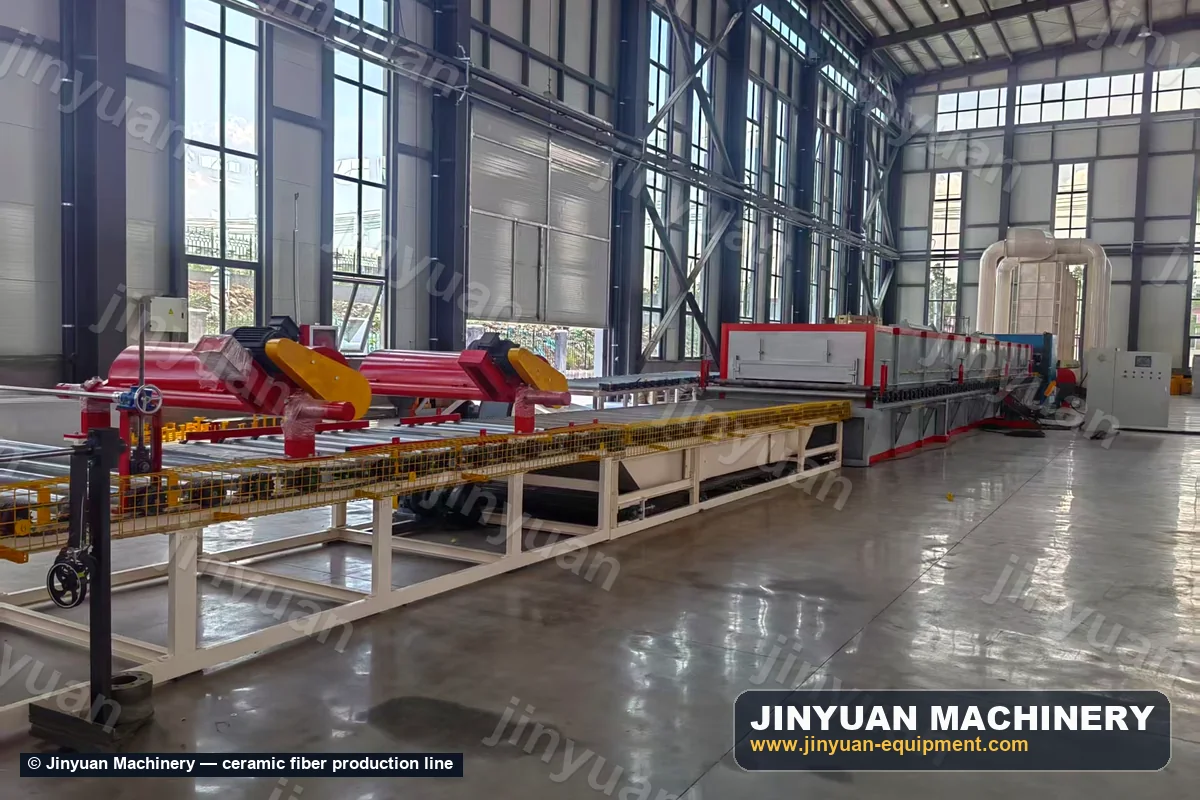
The Four Shifts at a Glance
Each shift below is first a market fact and second a specification consequence. The right-hand column is the part that survives after the market commentary ages: what you would write into a tender document because of it.
The four structural shifts and their specification consequences
| Shift | What the public record shows | What it changes on your line |
|---|---|---|
| Automation and intelligence | PLC control standard; monitoring and traceability spreading; line headcount falling from 20+ to under 15 in published cases | Buy data capability: integrated control, predictive maintenance, open interfaces |
| New-energy demand | New-energy share of industry purchases roughly doubled to about 8% in recent compilations | Purity, shot content and dimensional control become selling specifications |
| Energy and green production | GB 40877-2021 three-tier electricity limits; non-compliant capacity exiting | Specific energy becomes an acceptance number; leave headroom for green power and heat recovery |
| Export compliance | REACH substance limits for the EU; ASTM acceptance in the US | Low-chrome raw material route, batch testing and compliance files priced into export tonnes |
Shift 1: Automation Stops Being an Option and Becomes the Order-Winner
PLC control on a ceramic fiber line stopped being a differentiator years ago; it is simply what a line has. The frontier moved up the stack, and the public record shows where:
Automation capability: where most lines sit versus where orders are going (industry analysis)
| Capability | Where most lines are | Where the orders are going |
|---|---|---|
| Line control | PLC per machine, operator coordination | Whole-line integrated control from one station |
| Condition monitoring | Bearing temperature and vibration on the spinning machine | Predictive maintenance as standard scope |
| Traceability | Batch coding on pilot lines | Melt number to chemistry to finished roll, full chain |
| Quality measurement | Manual sampling between shifts | Automatic thickness gauging and online fiber measurement |
Two commercial facts sit behind that table. Labour cost is rising across the producing regions, and published cases show a single line's staffing compressed from more than twenty people to fewer than fifteen — a saving that only exists if the monitoring and interlocking actually replace the eyes and the rounds. And the equipment vendor's dividing line has moved with it: the premium orders go to whoever hands over stable data and a diagnosis with the machine, not to whoever sells the cheapest steel (industry analysis, field practice).
The engineering behind each row — interlock philosophy, sensor and I/O budgets, bearing monitoring, melt-flow laser control — is covered on our electrical and automation system page. What matters here is the direction of travel: automation scope is now part of the product definition. A line specified without data interfaces is a line specified for a market that no longer buys.
Shift 2: New-Energy Kilns Move the Product Mix Upward
Traditional demand — industrial furnace and kiln lining — is not going anywhere; it is the base load of the industry. The growth sits in a different set of kilns, and each of them buys a stricter blanket:
New-energy and retrofit applications driving incremental demand
| Application | Demand logic | Momentum |
|---|---|---|
| Lithium battery material sintering kilns | Insulation for cathode and anode firing furnaces | Fast growth |
| Hydrogen storage and refuelling | Fire protection for stations and storage tanks | Early but strategically large |
| Photovoltaic glass and silicon | Annealing lehr insulation | Stable |
| Kiln energy retrofits | Re-lining existing furnaces under carbon targets | Continuous |
The size of the shift is the number worth holding: public industry analyses put new-energy applications at roughly three percent of industry purchases a few survey periods back and near eight percent in the 2025–2026 compilations — a doubling in about two years (industry analysis). Small in absolute terms, but it is the fastest-growing slice and it buys the high end of the product range. Those high-end duties — sintering kilns, cracker linings, corrosive flue — are exactly where the grade and form selection on our applications page does its work.
Why should an equipment buyer care about a demand statistic? Because these customers audit different things. A battery-material sintering kiln owner specifies fiber purity, shot content and dimensional tolerance tighter than a steel-plant lining buyer ever did, and a blanket that passes the old spec can fail the new audit. The burden lands on the spinning and collection stages — melt chemistry control, roller stability, fiber diameter control — which is exactly the part of the line where capital is hardest to add later.
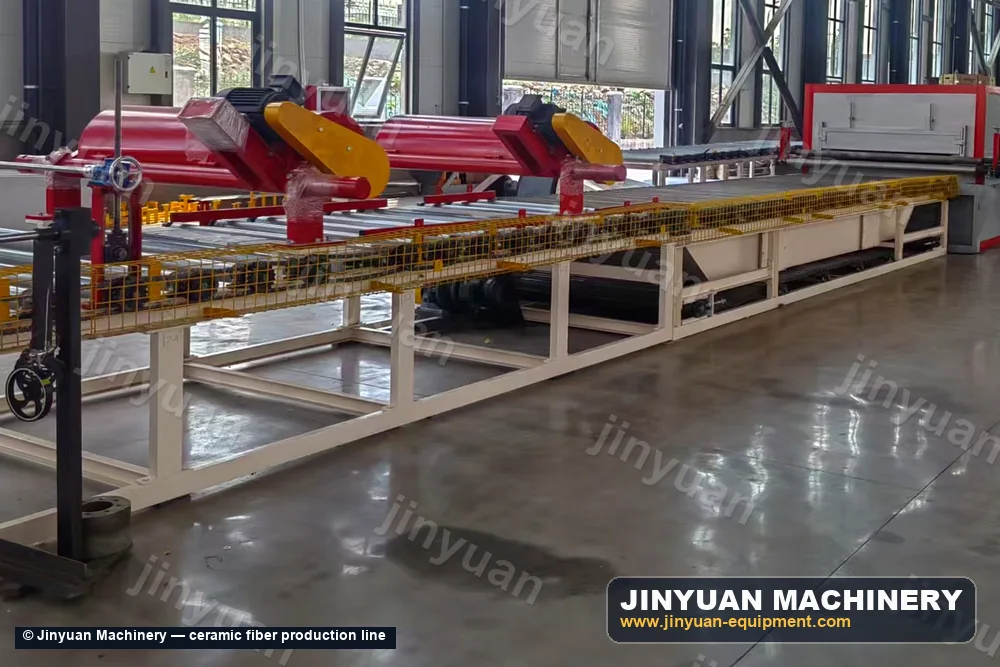
Shift 3: Energy Regulation Is Clearing Low-End Capacity
China's GB 40877-2021 sets per-tonne electricity consumption limits in three tiers, and it functions as an entry threshold for new and existing lines alike (national standard). Around it sit the dual control of energy intensity and total consumption, routine environmental inspection, and carbon quota plus green-power trading for the large consumers. The market effect reported in the public analyses is blunt: high-consumption lines are constrained, small capacity that cannot meet energy and environmental thresholds keeps exiting, and quality capacity concentrates in the producing regions.
For someone specifying a line today this is the cheapest shift to respect and the most expensive to ignore:
- Design to the limit from day one and write specific energy consumption into equipment acceptance testing, so the number is measured at handover instead of argued about afterwards.
- Meter by zone — melting, spinning, needling, curing — because a per-tonne figure you cannot decompose is a figure you cannot defend or improve.
- Reserve layout and electrical headroom for green power: direct purchase agreements, rooftop photovoltaic, waste-heat recovery and variable-frequency drives on the large fans.
- Keep a carbon-footprint route open, because downstream customers increasingly ask for life-cycle numbers as part of supplier qualification.
The design-side treatment of the same standard — zone parameters, the benchmarking method, the pre-freeze checklist — lives on our production line design and planning page. The point here is market structure: an energy limit is not only a compliance cost. It is the mechanism by which your future competitors disappear, and it only works in your favour if your line was built inside it.
Shift 4: Export Compliance Decides Who Sells Into Europe
REACH restricts substances in products placed on the EU market, and for ceramic fiber the practical focus is hexavalent chromium and kin: export shipments need a compliance position, which in practice means a low-chrome, high-purity raw-material route, batch-level test records and a documentation file — all of which carry cost that belongs in the export price (regulation summary). The United States side is less regulatory and more contractual: acceptance against ASTM specifications such as C892. The Middle East and Southeast Asia, where high-end demand is growing, ask for supplier qualification plus test reports.
- Put the chromium and impurity limits into the raw-material purchase specification, not into a quality manual written after the first complaint.
- Retain batch-level test records in a form a customer audit can retrieve years later.
- Carry a compliance cost line in every export quotation, decided before the first shipment rather than after the first question.
Field practice, stated plainly: we have watched export orders lost not on price and not on delivery but on a missing declaration. The paperwork is part of the machine's job, because the chemistry it certifies starts at the furnace charge.
Concentration: A Market Where the Top Five Hold About Two Thirds
Public industry analyses put the combined share of the five largest producers at about 63.8% including board products — a concentration level that tells you this is no longer a fragmented cottage industry (industry analysis). The structure beneath that number has three floors:
Competitive tiers in the ceramic fiber products market
| Tier | Who | Characteristic |
|---|---|---|
| First | Listed full-chain leaders | Capacity, financing access, a voice in standard-writing |
| Second | Regional specialists | Strong niche products, disciplined cost control |
| Third | Small capacity | Under energy and environmental clearing pressure |
Consolidation proceeds along three paths, and all three are visible at once: leaders expanding and acquiring while building new intelligent lines; policy clearing non-compliant capacity; and downstream majors running supplier-list systems that keep only qualified makers. For a new entrant the door is not closed, but it is narrower than it looks. You enter either with a niche the second tier defends well, or with cost and compliance the third tier cannot reach. Entering the crowded middle — standard grades, standard line, no compliance file — is how capital disappears.
Price Differentiation: The Crowded 1260 and the Premium 1430
The same analyses describe a market split by grade: ordinary 1260-type product in intense price competition, while 1430 and 1600 class high-purity and low-zirconia grades carry significant spreads. That split is an equipment fact before it is a sales fact. Furnace chemistry control, spinning stability and needling precision decide which grades you can hold within tolerance, and a line bought to make the cheapest grade cannot climb the price ladder later without new capital. Grade range is a specification decision, made on the day the line is ordered.
What the Four Shifts Change on Your Specification Sheet
Compressed into the language of a tender document, the four shifts become seven requirements:
- Control: whole-line PLC with open data interfaces and a process historian, not per-machine boxes that cannot talk to each other.
- Monitoring: bearing temperature and vibration on the spinning machine as standard scope, with predictive-maintenance outputs rather than raw alarms.
- Traceability: batch coding from melt number through chemistry to finished roll, retrievable for customer audits.
- Measurement: automatic thickness gauging at the line end, with shot content and fiber diameter testing on a documented routine.
- Energy: specific consumption written into acceptance against GB 40877-2021, with zone metering installed from commissioning.
- Compliance: raw-material impurity limits in the purchase specification, batch test records retained, export documentation scope defined before the first shipment.
- Headroom: space and electrical reserve for green power, waste-heat recovery and the next step of automation you have not needed yet.
Timing: Take the Window, Respect the Cycle
The new-energy window is real, and so is the oldest risk in heavy industry: capacity added at the top of a cycle sells into the bottom of the next one. The public analyses themselves warn about overcapacity in the same breath as they report the demand growth, and they are right to. The defence is not to skip the window but to enter it with discipline: map your own market first, model the cost of your tonne at a conservative ramp, and choose a grade mix and a compliance file that survive a price war. Our market-first selection framework and our unit-economics model are the two tools we use for exactly that conversation.
What We Will Not Claim
Four refusals, so the claims above keep their weight. This page does not forecast prices or shares beyond what the public compilations already state; a share from a 2025–2026 analysis is a photograph, not a promise. It does not claim that 63.8% or 7.9% describes your market — those are industry-wide figures and your region may sit far from the mean. It does not claim automation pays back on every line: on a small single-grade line running one shift, the honest answer can be less automation, and anyone who sells you the full stack regardless is selling the stack. And it does not claim compliance wins orders; compliance only keeps you in the room where orders are won.
The Bottom Line
The ceramic fiber market is being reshaped by four forces that all end up on the same piece of paper: your line specification. Automation became the order-winning feature, so control, monitoring and traceability are now product definition. New-energy kilns moved the profitable mix toward purity and precision, so the spinning and needling stages carry more of the business case than they used to. Energy regulation turned specific consumption into a licence to operate and is clearing the capacity you would otherwise compete against. Export compliance turned chemistry paperwork into a commercial gate. None of the four is a reason to buy a more expensive machine; all four are reasons to buy a differently specified one — and the specification is the one decision on the project that cannot be revisited cheaply.
Frequently Asked Questions
What are the four structural shifts in the ceramic fiber industry?
Automation becoming the order-winning feature rather than an option; new-energy kiln demand moving the product mix toward high-purity grades; energy and environmental regulation clearing low-end capacity; and tightening export compliance, above all REACH in the EU. Each one ends as a line on an equipment specification, which is why they matter to a buyer and not only to an analyst.
How concentrated is the ceramic fiber market?
Public industry analyses put the combined share of the five largest producers at about 63.8% including board products. Below them sit regional specialists with strong niche products, and below those a third tier of small capacity under energy and environmental clearing pressure. Consolidation runs through leader expansion and acquisition, policy-driven exit of non-compliant capacity, and customer supplier-list systems.
Why does new-energy demand change what a blanket line must produce?
Because the new customers audit tighter. Lithium battery material sintering kilns and hydrogen fire protection specify fiber purity, shot content and dimensional tolerance beyond what traditional furnace lining buyers required, and public analyses show the new-energy share of industry purchases roughly doubling to about 8% in recent compilations. The burden lands on melt chemistry control, spinning stability and needling precision — the stages where capital is hardest to add later.
What does GB 40877 mean for a new ceramic fiber line?
GB 40877-2021 is the Chinese national standard setting per-tonne electricity consumption limits in three tiers, and it acts as an entry threshold for new and existing lines. In practice: design the line to the limit from day one, write specific energy consumption into equipment acceptance testing, and install zone metering so the per-tonne figure can be decomposed and defended.
What does REACH require from ceramic fiber exporters to the EU?
Restrictions on substances including hexavalent chromium in products placed on the EU market, with a compliance position for exports. In practice that means a low-chrome, high-purity raw-material route, batch-level test records and a documentation file — and the cost of all three belongs in the export price. Buyers in the US typically accept against ASTM specifications such as C892 instead.
Should a new blanket line be fully automated from day one?
PLC control, condition monitoring and open data interfaces should be, because they are now part of the product definition rather than extras. Whole-line integrated control and automatic gauging depend on your grade mix and volume: published cases show line headcount falling from over twenty people to under fifteen, but that saving only exists where the monitoring genuinely replaces manual rounds. On a small single-grade line the honest answer can be less automation.
Is now a good time to invest in a ceramic fiber blanket line?
The window from new-energy demand and capacity clearing is real, and so is the cycle risk of building at the top of one. The disciplined sequence is: map your own market first, model the cost of your tonne at a conservative ramp, then enter with a grade mix and a compliance file that survive a price war. The trends decide what to specify; your tariff, raw material and customers decide whether to sign.