
Between the batching house and the spinning machine stands one vessel, and inside it a dry, weighed solid has to become a liquid that behaves. Melting is the stage where composition stops being a recipe and starts being a behavior: everything the batch was promised upstream is either delivered here or lost here, and everything the fiberizer will be asked to do downstream is either handed to it by the stream or denied to it forever. This page reads melting as a material story — the rungs the charge climbs on its way to a glassy bath, the two uniformities the bath owes the orifice, the viscosity the stream owes the route that will draw it, and the fault patterns that let an operator read a bad roll of fiber back to the bath that made it.
For the equipment, see the melting furnace guide. For the spinning rollers, see the fiber formation guide. This page explains batch melting, homogenization and how melt stability affects the fiber.
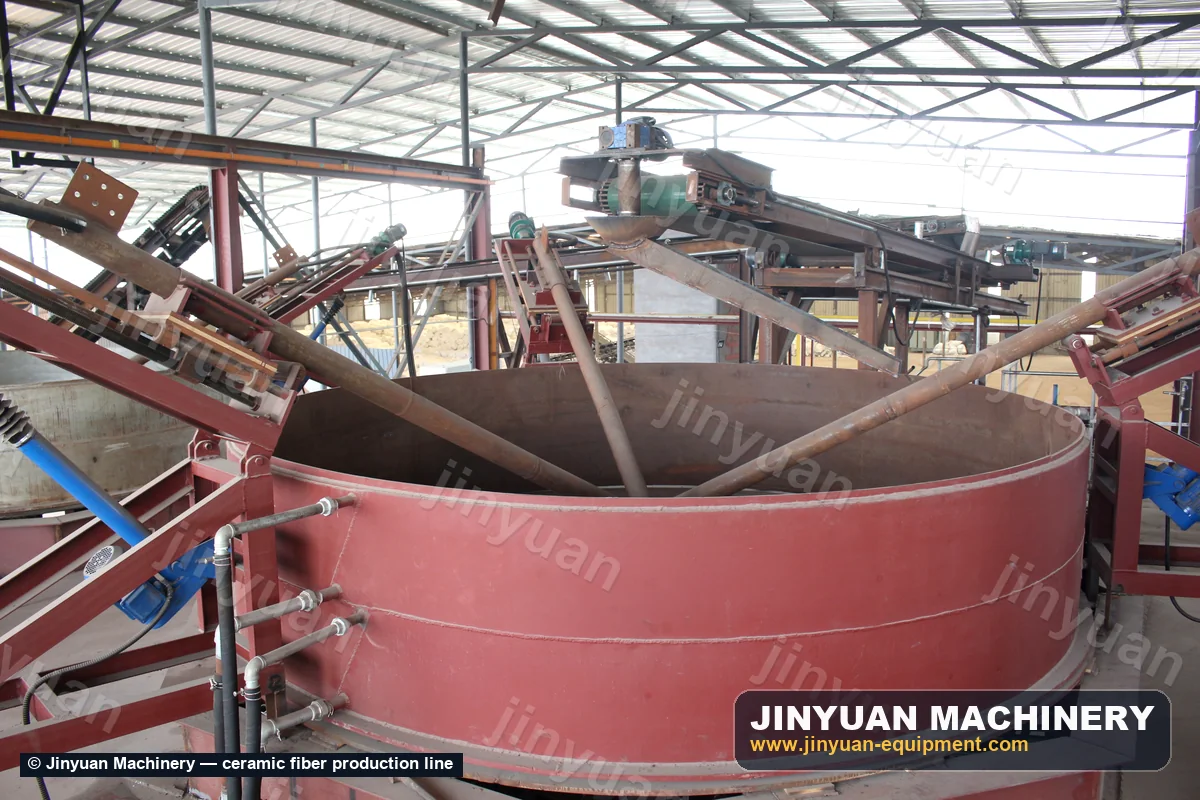
Five Rungs: What the Batch Becomes Inside the Furnace
The charge does not melt; it climbs. A dry, weighed and mixed batch entering the furnace first gives up its water — free water in the low hundreds of degrees, bound water behind it — because a charge that steams inside a bath bursts and scars the pool. Then the oxides react in the solid state and the grains soften where they touch, in the band roughly between 800 and 1400 °C. Then the first liquid appears: eutectic compositions melt before their neighbors and wet the grain pack, sintering it into a mass that can finally carry heat by convection. Only then does full melt arrive, in the 1700-2200 °C band that follows the chemistry of the product, and only after full melt does the bath become one liquid rather than a suspension of reluctant cores.
The ladder the charge climbs, rung by rung, with the band each rung occupies.
| Rung | Band | What changes |
|---|---|---|
| Preheat and dehydration | 200-800 °C | Free and bound water leave; a wet charge steams and bursts the pool |
| Solid-state reaction and softening | 800-1400 °C | Oxides react in the solid state; grains soften at their contacts |
| Sintering and first melt | follows the charge chemistry | Eutectics form; the first liquid wets and closes the grain pack |
| Full melt | 1700-2200 °C | The charge becomes one glassy liquid; surviving cores become shot later |
| Homogenization | held at melt temperature | Composition and temperature even out; the stream gains a single viscosity |
The ladder cannot be bought out with power. Current pushed ahead of the chemistry melts the outside of the charge and leaves cold cores inside it, and a cold core does not dissolve on the way to the orifice — it arrives at the roller as shot and as hard, coarse fiber, which is why incomplete melting is a melt-side fault even though it is discovered a machine away. The same logic sets the working band: on a blanket line the setpoint sits in the upper part of the 1700-2200 °C ladder, in the 1900-2200 °C window our parameter reference cites, because the chemistry of a blanket grade asks for a bath thin enough to draw and a ladder climbed all the way to the top.
Homogenization: The Two Uniformities the Stream Must Carry
A fully molten bath is not yet a finished melt, because a bath can be liquid and still uneven in two independent ways. It can be uneven in composition, where the last-melted regions and the early pool carry slightly different chemistry; and it can be uneven in temperature, where a stratified bath holds a hot crown over a cooler floor. Either unevenness is enough to ruin the stream, because viscosity is a function of both chemistry and temperature: a bath that is uneven in either hands the orifice a viscosity that walks with time, and a walking viscosity prints as fiber of uneven diameter along the whole roll.
Homogenization is therefore not more melting; it is time and motion at temperature. The bath's own convection, driven by the electrode layout and the thermal field, folds the late chemistry into the early pool and levels the crown into the floor, and the hold exists to let that folding finish before the stream is asked to carry the result. The payoff is exactly one number: a stream whose viscosity is the same this minute as it will be in an hour, which is the only condition under which the fiberizer's own settings mean anything at all.
How Melt Viscosity Affects Centrifugal Spinning
Temperature and composition set the viscosity at the furnace outlet. Melt-side practice notes quote 5–15 Pa·s at the flow for centrifugal spinning. References can differ because they use different machines or measure at different points. Agree the operating range using the intended charge materials and confirm it in melt trials.
Six Controls, Read as Three Balances
The control list for melting reads as six parameters — melt temperature, melt viscosity, stream flow, melt level, supply power and orifice temperature — but on the floor it behaves as three balances, and each balance has a failure signature of its own. The first is power against feed. Power pushed ahead of the feed overheats the bath and spends itself on the refractory; feed pushed ahead of the power chills the pool and drops the level, and the batching house owns the feed side of that balance, which is why feeding rate is counted among the line's control parameters even though the equipment sits on the batching side of the wall.
The second balance is level against stream. The melt level is the head behind the orifice: it sets the pressure that pushes the stream out and, with it, the stream's thickness and its temperature stability. A falling level thins the stream and unsteadies every fiberizing parameter downstream; a swinging level prints as diameter spread along the roll. Level and furnace current, watched together, are the two tell-tales of the first balance, because a bath fed and powered in rhythm holds both of them still.
The third balance is orifice temperature against condensation. The bore must stay above the melt's freezing point for as long as the campaign runs, which is what the auxiliary heat and the nitrogen shroud around the orifice are for; melt that condenses in the bore blocks the stream, and a bore that erodes and widens thickens it. The hardware and its discipline — bore material, shroud, erosion watch and the rule that both failure modes end in a cold repair — live on our melting furnace page, because they are the vessel's business; what lives here is the balance itself, held rung by rung above it.
Reading the Fiber Back to the Melt: Five Fault Patterns
The melt announces its faults late and elsewhere: at the roller, at the collection box, at the winder. An operator who knows the five patterns can read a bad roll back to the bath that made it, and the read is fast because each pattern points at one balance.
Five melt-side fault patterns, read from what the fiberizer shows.
| What the fiberizer shows | Melt-side read | First move |
|---|---|---|
| Shot up, fiber hard | Incomplete melt: temperature low, charge coarse or fed too fast | Raise temperature, refine the charge, slow the feed |
| Diameter spread along the roll | Stream instability: level or power swinging | Steady the two balances, check electrode current |
| No stream at all | Orifice condensed or blocked | Raise orifice temperature, clear the bore; cold repair if it waits |
| Refractory wearing fast, kWh high | Bath running above its window | Trim power through the regulator, re-check the setpoint |
| kWh creeping alone | Power and feed out of rhythm | Re-match power to the feed cadence |
The lag is the point. The winder sees yesterday's bath, so a defect discovered at the roll describes a balance that was wrong an hour or a shift earlier — which is exactly why the three balances are watched at the furnace panel and not at the winder, and why the shot that arrives with hard fiber is answered with a change at the charge, not a change at the roller. Our shot content page traces the same defect from the spinning side; this table is its mirror image, read from the melt.
What We Deliberately Do Not Claim
The furnace type of our own melt shop, its rated power, the melt temperature we actually run, the orifice material and its change cycle, and our kilowatt-hours per tonne are project figures, and we do not publish them on a public page. The ladder bands, the spinning viscosity references and the fault patterns above are public industry reference and melt-side practice notes with their counting basis stated where they disagree. A quotation from us carries the real numbers for your grade mix and tonnage; this page carries only what transfers between plants.
The Bottom Line
Keep feed and power, melt level and flow, and orifice temperature in balance. A stable melt stream lets the spinning rollers make fiber to the target diameter and shot content.
Frequently Asked Questions
What actually happens to the batch inside a ceramic fiber melting furnace?
It climbs five rungs: preheat and dehydration around 200-800 °C, solid-state reaction and softening around 800-1400 °C, sintering and first melt as the eutectics form, full melt in the 1700-2200 °C band, then homogenization held at temperature. Each rung is a different mechanism, which is why power cannot substitute for time: a charge melted on the outside with cold cores inside arrives at the fiberizer as shot and hard fiber.
Why is homogenization a separate job from melting?
Because a fully molten bath can still be uneven in two ways: in composition, if the last-melted regions carry a different chemistry, and in temperature, if the bath is stratified. Either unevenness gives the orifice a viscosity that moves with time, and a moving viscosity prints as fiber of uneven diameter. Homogenization is the hold that lets the bath's own convection even out both before the stream starts.
What viscosity does the melt need for centrifugal spinning?
Melt-side practice notes quote 5–15 Pa·s at the flow for centrifugal spinning. Roller-side references differ with the machine and measurement point. Use melt trials with the intended charge materials to set the operating window.
Why does melt level matter if the orifice is at the furnace floor?
The level is the head behind the orifice. It sets the pressure that pushes the stream out and, with it, the stream's thickness and temperature stability. A falling level thins and unsteadies the stream; a swinging level prints as diameter spread at the roll. Level and furnace current, watched together, are the two tell-tales of the power-feed balance.
What stops a melt stream at the orifice?
Condensation or blockage in the bore. Melt that freezes in the bore blocks the stream, and foreign material can do the same. The first move is orifice temperature; the hardware discipline, bore material, nitrogen shroud and erosion watch, lives on our melting furnace page, because a bore that must be cleared cold ends the campaign.
How do operators read fiber defects back to the melt?
By pattern: shot with hard fiber reads as incomplete melt, diameter spread reads as a swinging level or power, a stopped stream reads as a condensed bore, fast refractory wear with high kWh reads as an over-hot bath, and kWh creeping alone reads as power and feed out of rhythm. The winder sees yesterday's bath, which is why the balances are watched at the furnace panel.