
Broken Needles Are a Symptom
A broken needle on a needle loom is almost never a random event. It is the visible symptom of one of a small set of root causes, and treating the symptom — replacing the needle — without fixing the cause means you replace it again soon after. Diagnosing needle breakage correctly saves needles, saves blanket, and saves the hard defects that a broken needle left in the web causes downstream.
There are four root causes, and they are all identifiable. Here they are, in the order of how often they are responsible.
Cause One: The Wrong Needle Spec for the Thickness
The most common cause of needle breakage is running a needle that is not matched to the blanket thickness. A needle that is too fine or too short for a thick, dense web flexes under the penetration load, jams against the web, and snaps. This is the direct consequence of running a single needle specification across the product range — the shortcut that grading by thickness exists to prevent.
The fix is to grade the needle set by blanket thickness: a heavier gauge with a longer working blade for thick blanket, a finer needle for thin felt. If breakage is concentrated on the thicker products, this is almost always the answer.
Cause Two: Shot Content in the Incoming Fiber
The largest single driver of premature needle wear is not mechanical — it is shot, the hard unfiberised particles that reach the needling stage in the fiber web. Shot acts as an abrasive against every needle that strikes it, and high shot content translates directly into a high breakage and wear rate, no matter how well the needle spec is matched.
The fix is upstream, at the spinning machine: control shot at the source with stable melt temperature and flow, and remove it with shot separation before the fiber reaches the forming section. This is why shot separation pays for itself in needle life — it is not a fiber-quality nicety, it is a needle-consumption control.
Cause Three: Misaligned Guide Plates and Drift
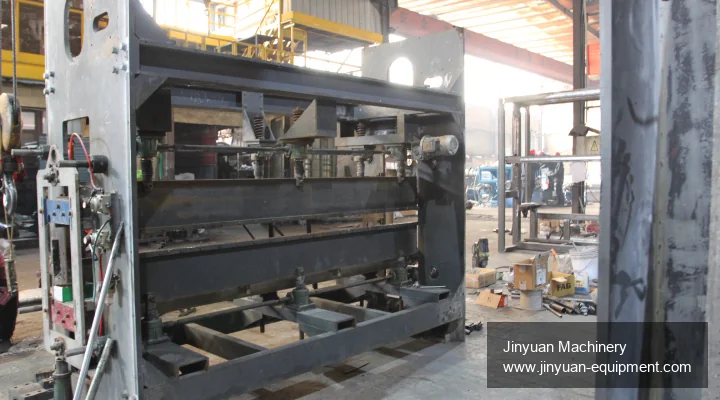
Needles pass through guide plates on every stroke, and those plates keep the needles travelling straight. If the plates are misaligned — through wear, or through thermal drift shifting the frame — the needles bind and snap at the point of misalignment. A pattern of breakage concentrated in one region of the board, rather than spread across it, points at this cause.
The fix is a monthly alignment verification and prompt replacement of worn guide plates. It is a maintenance discipline, not a design change, but it prevents a large share of preventable breakage.
Cause Four: A Worn Needle Board
The needle board itself wears over time — the holes elongate, the board flexes, and the needles no longer travel true. A worn board produces the same binding failure as misaligned guides, and it is usually the cause when breakage climbs slowly over a long production run rather than appearing suddenly.
The fix is board replacement on a wear-based schedule, tracked by running hours and breakage trend rather than by a fixed calendar guess.
Reading the Breakage Pattern
The pattern of breakage tells you which cause you are looking at before you take anything apart:
- Concentrated on thick products — wrong needle spec for thickness; grade the needle set.
- Uniformly high across everything — shot content in the fiber; fix it upstream at the spinning section.
- Concentrated in one region of the board — misaligned guide plates; verify alignment.
- Slowly rising over a long run — worn needle board; replace on schedule.
Why Catching It Early Matters
A broken needle is not just a needle to replace. If it is not detected immediately, the broken piece can remain in the web and become a hard defect in the finished blanket — a foreign body in a product sold on insulation integrity. This is why needle breakage monitoring matters: it is a quality control, not just a maintenance convenience. The sooner you know a needle broke, the sooner you can pull it and inspect the surrounding web.
The Bottom Line
Needle breakage has four root causes — wrong needle spec, shot content, misaligned guides, and a worn board — and the breakage pattern tells you which one you are dealing with. Fix the cause, not the needle. Grade the needle set by thickness, control shot upstream, verify alignment monthly, and replace the board on schedule, and breakage drops to the level of a routine consumable instead of a recurring quality problem.
Related Reading
Continue with these guides and equipment pages: