
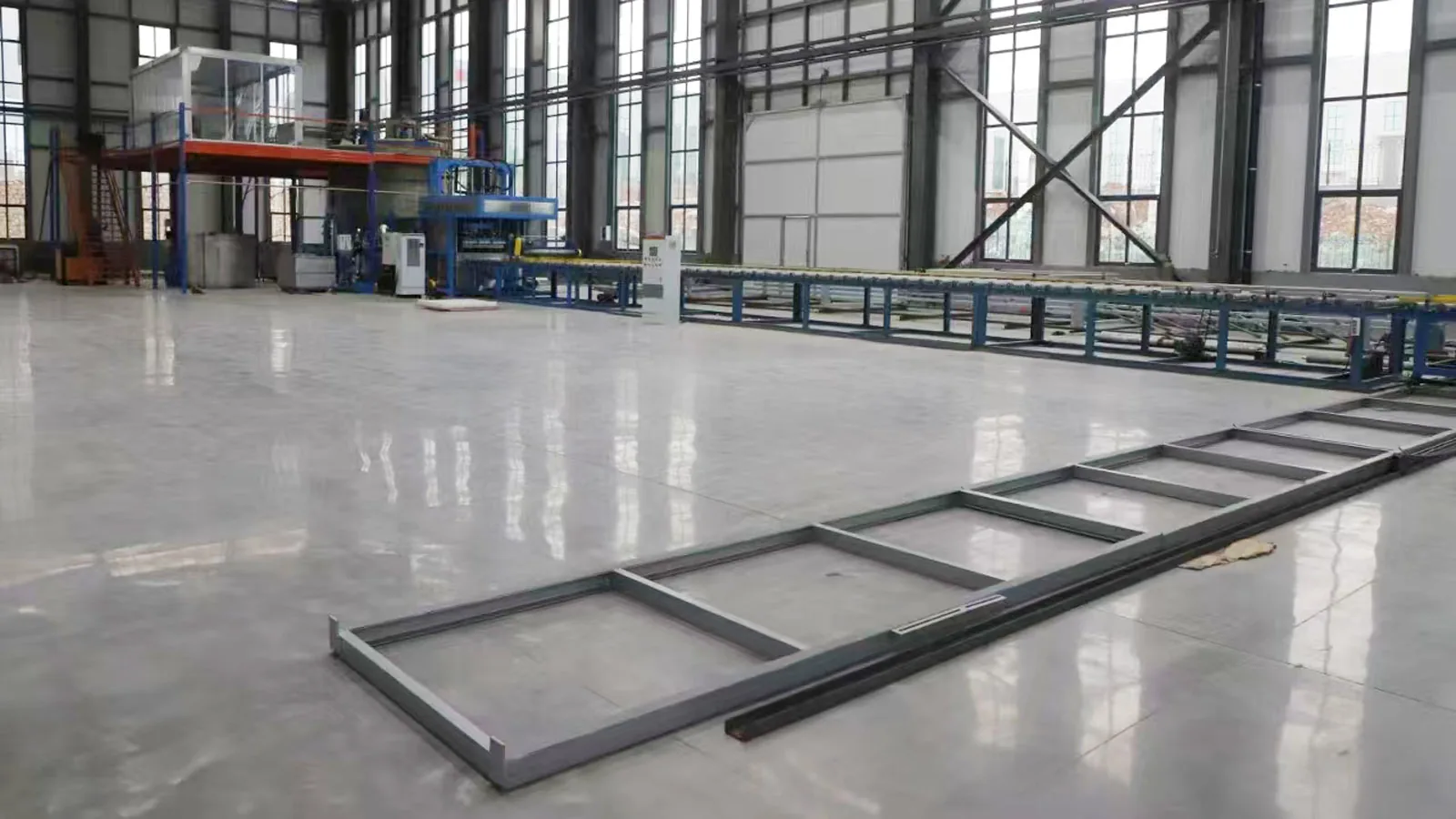
Wet-forming board manufacturing — from slurry preparation to finished rigid insulation panels
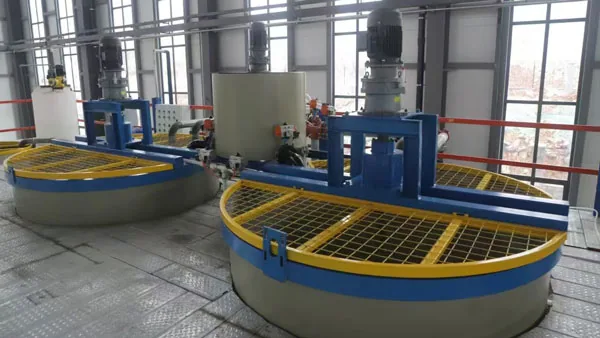
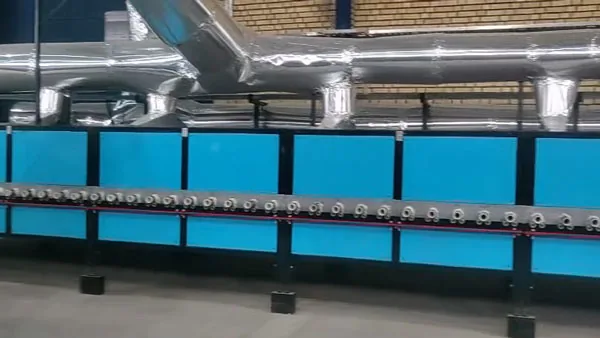
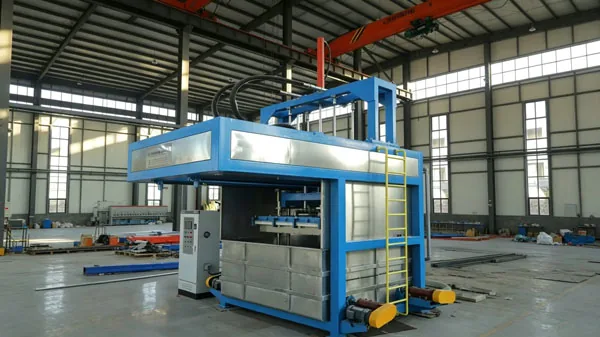
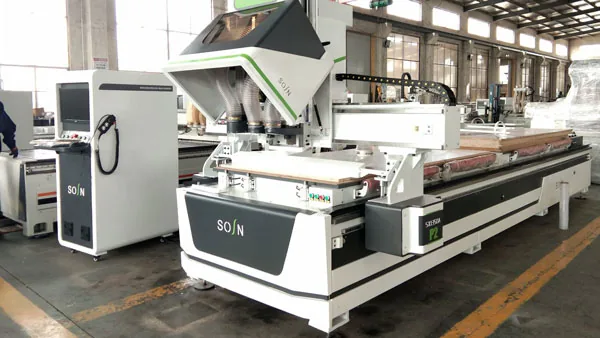
A ceramic fiber board production line uses wet-forming technology to turn bulk ceramic fiber into rigid, dimensionally accurate insulation panels. Unlike blanket, which is needled dry, board is made by dispersing fiber in water with binders, vacuum-forming the slurry into a mat, pressing it to thickness, drying it in a multi-zone tunnel and polishing both faces. The result is a self-supporting panel with far higher compressive strength and much tighter thickness tolerance than blanket.
Board lines are the natural second investment for a plant that already makes bulk fiber or blanket, because the raw material — ceramic fiber bulk — is the same. That vertical integration is why many customers start with a cotton line, then add a blanket line, then a board line once the local market for rigid board develops.
The two specification decisions that matter most are board density range and maximum thickness. Density between roughly 220 and 500 kg/m³ covers most of the market, and reaching the top of that range requires a press with adequate tonnage and a dryer long enough to remove water without cracking. We size the press, dryer zones and mold set around your actual product list rather than a nominal capacity figure.
| Annual Capacity | 500 – 5,000 tons/year |
|---|---|
| Classification Temperature | 1260°C / 1350°C / 1430°C |
| Board Size (standard) | 900×600mm / 1200×1000mm |
| Board Thickness | 6mm – 100mm |
| Bulk Density | 220 – 500 kg/m³ |
| Density Tolerance | ±10% |
| Forming Method | Vacuum wet-forming + hydraulic pressing |
| Drying Method | Multi-zone hot-air tunnel dryer |
| Surface Treatment | Automatic double-side polishing |
| Cutting Accuracy | ±0.5mm |
| Water System | Closed-loop recycling with filtration |
| Control System | PLC + HMI touchscreen |
| Power Supply | 380V/50Hz/3Phase (customizable) |
How a ceramic fiber board production line runs from raw material to finished product
Where the output of this line is used
Rigid board used as a self-supporting hot-face layer in heat treatment and forging furnaces.
Load-bearing backup insulation in tunnel kilns, shuttle kilns and kiln car decks.
Cut gaskets and seals for furnace doors, burner blocks and observation ports.
Engineering decisions that show up in your daily operating cost
Polishing both faces after drying gives a board that stacks flat and cuts clean, which matters the moment your customer starts CNC-cutting gaskets.
Process water is recovered, filtered and returned to the slurry tank. That reduces both water cost and the effluent permitting burden on your site.
Interchangeable vacuum molds let one line run several board formats, so a small order does not tie up the whole line.
Common questions before ordering a ceramic fiber board production line
Other production lines we build
Technical guides and buyer resources
Send us your capacity requirement and product specifications for a tailored proposal.
Get a Free Quote