Eight specialized product lines covering the full range of ceramic fiber insulation manufacturing — from melting and fiberising through to value-added conversion

Complete needle-punched blanket production from raw material melting to rolled finished product. Capacity 1,000–10,000 tons/year.
View Details →
Wet-forming board line with batching, forming, drying, polishing, and packaging. Produces rigid boards up to 1260°C classification.
View Details →
Bulk fiber production using spinning or blowing technology. Raw material for blankets, boards, modules, and loose-fill insulation.
View Details →
Lightweight flexible felt for wrapping, gasketing, and thermal barrier applications. Low density, high flexibility output.
View Details →
Folding and compression equipment for furnace lining modules, edge-grain blocks, and Z-blocks. Automated stacking and strapping.
View Details →
Lamination line for aluminum foil backed blankets used in HVAC, building insulation, and appliance thermal barriers.
View Details →
Vacuum forming and CNC machining for custom shapes — pipe sections, cone adapters, furnace door linings, and more.
View Details →
Wet-laid paper production for thin, flexible high-temperature gasketing sheets. Thickness 0.5mm–6mm, width up to 1200mm.
View Details →The individual machines that decide fiber quality, blanket density and the quality of the finished braided packing
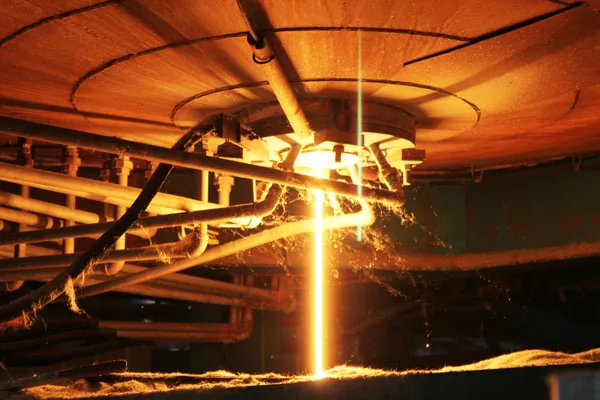
Two-roller centrifugal fiberising — the stage that sets fiber diameter and shot content for everything downstream.
View Details →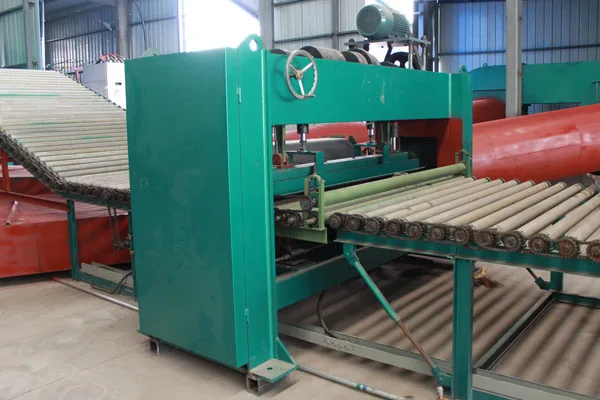
Double-board needling that bonds the web and sets blanket density, tensile strength and surface finish.
View Details →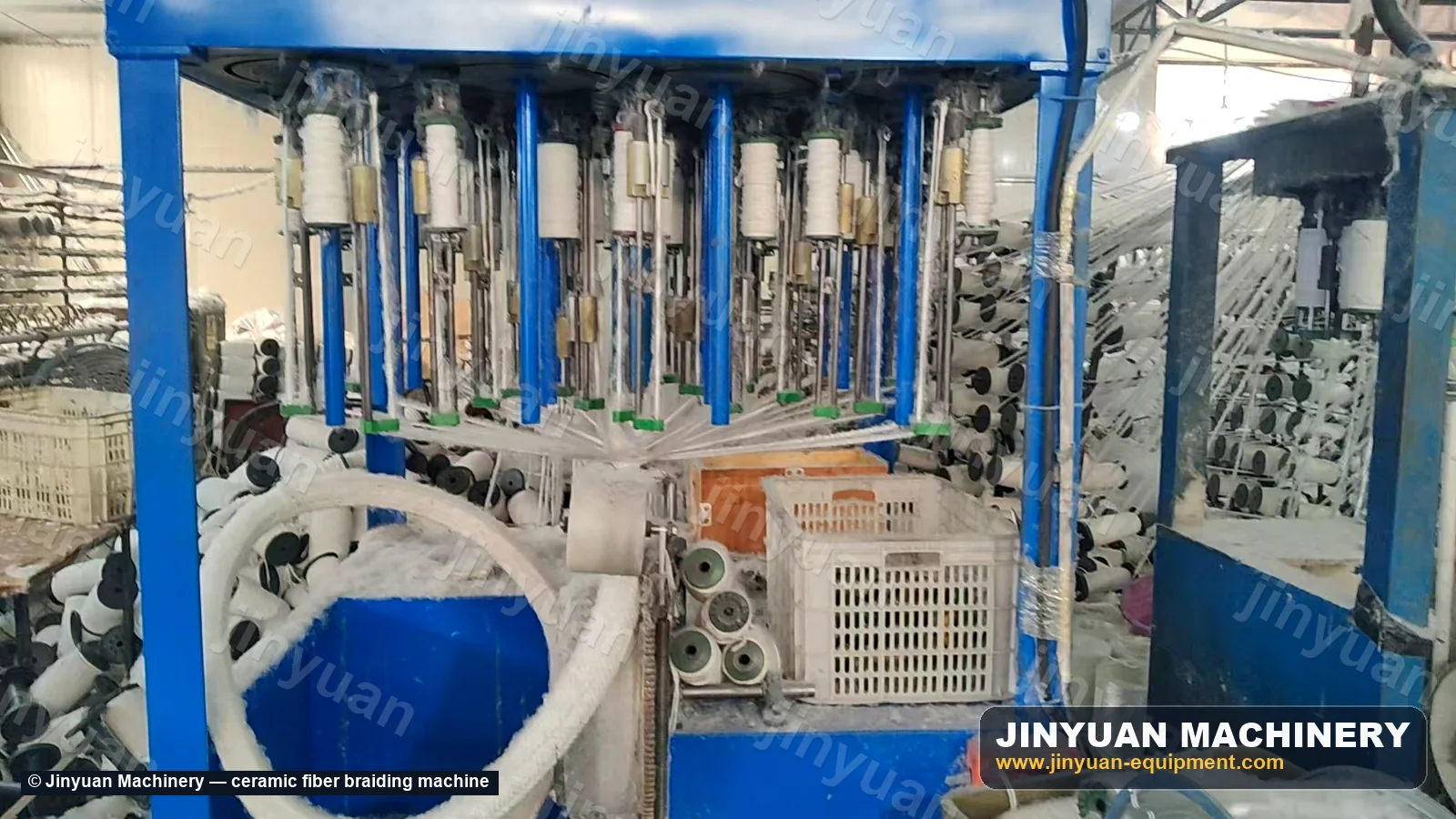
Maypole braiders turning ceramic fiber yarn into gland packing, rope and sleeve — 8 to 64 carriers, sized to your section range.
View Details →Comparison of the eight production lines by process, output and typical entry capacity
| Production Line | Core Process | Output | Typical Capacity |
|---|---|---|---|
| Cotton / Bulk Fiber Line | Melting + fiberising | Loose bulk fiber | 1,000 – 8,000 t/y |
| Blanket Line | Needle punching | Needled blanket rolls | 1,000 – 10,000 t/y |
| Board Line | Vacuum wet-forming | Rigid insulation board | 500 – 5,000 t/y |
| Paper Line | Wet-laid forming | Thin flexible sheet | 200 – 1,500 t/y |
| Felt Line | Light needling | Soft flexible felt | 500 – 3,000 t/y |
| Module Equipment | Folding + compression | Pre-compressed modules | Conversion stage |
| Shaped Parts Equipment | Vacuum forming + CNC | Custom preformed shapes | Per tooling design |
| Foil-Faced Line | Adhesive lamination | Foil-faced blanket | Conversion stage |
| Braiding Machine | Carrier-track braiding | Braided packing & rope | 200 – 260 m / shift |
Capacities above are the ranges we configure most often, not hard limits. Every line is sized to your target tonnage, grade and finished dimensions — if your requirement sits outside these figures, ask us and we will tell you directly whether it is practical.
Most ceramic fiber plants are not built in one step. They are built in stages as the local market develops, and the order matters because each stage feeds the next.
Stage 1 — melting and fiberising. A cotton line produces bulk fiber. It is the smallest capital step and the output is saleable on its own to converters without melting capacity. It also sets the quality ceiling for everything you later add.
Stage 2 — primary conversion. A blanket line is usually next, because blanket is the largest and most liquid product market. Board is the alternative if your market is furnace linings and hot-face insulation rather than general industrial insulation.
Stage 3 — value-added conversion. Module equipment, foil-facing, paper and shaped parts all convert blanket or bulk fiber into higher-margin specified products. These are the smallest capital additions and the best margin improvements.
A fourth route — braided sealing products. A braiding machine is a different kind of conversion. It does not take blanket; it takes spun yarn and turns it into gland packing and braided rope for pumps, valves and furnace door seals. The tonnage is far smaller than an insulation line, but the margin per kilogram is materially higher, which is why converters often add it once the fiberising section is stable.
If you plan more than one stage, tell us at the start. Reserving space, power capacity and conveying routes during stage one costs far less than retrofitting around equipment that is already running.
Common questions when comparing ceramic fiber production lines
Tell us your target product and annual output — our engineers will recommend the right configuration.
Talk to an Engineer