
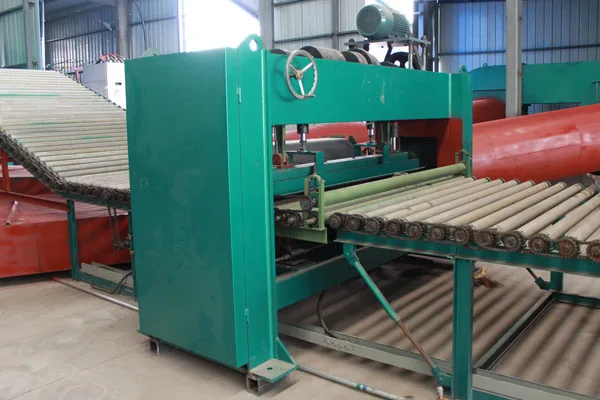
Complete needle-punched blanket manufacturing — from raw material melting to rolled finished product
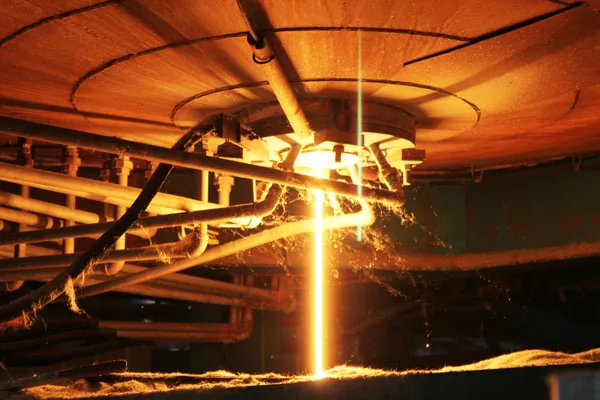
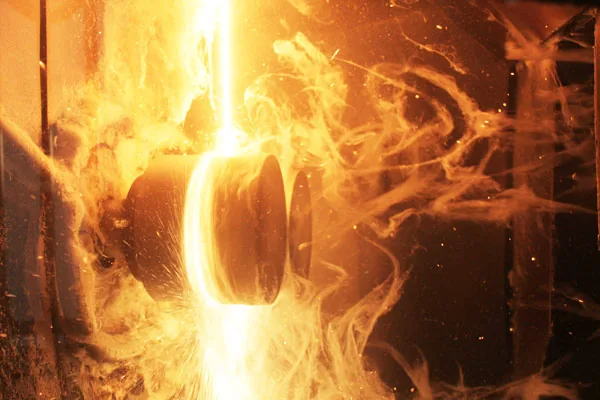
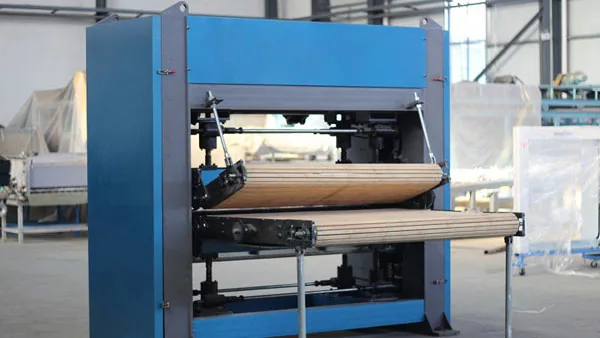
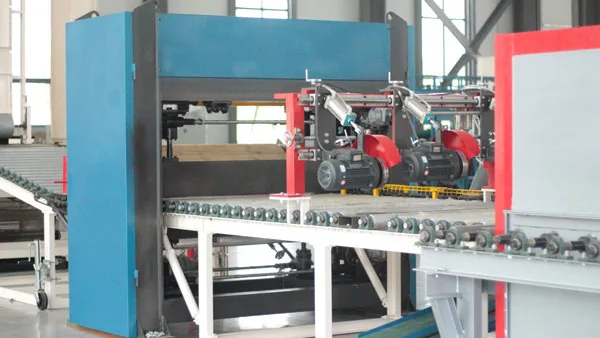
A ceramic fiber blanket production line converts alumina-silica raw materials into needled blanket rolls through a continuous chain of processes: batching, melting, fiberising, cotton collection, blanket forming, needle punching, curing, cutting and packaging. The line is the core asset of any ceramic fiber plant, and its configuration determines the fiber diameter distribution, shot content, density uniformity and tensile strength of the finished blanket.
Two fiberising routes are available and the choice drives both capital cost and product grade. Spinning (centrifugal spinning on high-speed rollers) produces longer, finer fibers with low shot content and is the standard route for standard and high-purity blankets. Blowing (high-velocity air or steam jet) is simpler and cheaper to install, but yields shorter fibers with higher shot content, suiting lower-grade bulk and loose-fill applications. We supply both, and will recommend one based on your target product mix rather than pushing a single configuration.
Each line is engineered around four inputs: raw material composition, target blanket density range, finished width and required annual tonnage. From those we size the furnace transformer capacity, the number of spinning heads, the needle loom working width and station count, and the curing oven length. Turn-key delivery covers plant layout design, equipment manufacture, shipping, installation supervision, commissioning and operator training.
| Annual Capacity | 1,000 – 10,000 tons/year |
|---|---|
| Classification Temperature | 1260°C / 1350°C / 1430°C |
| Blanket Width | 610mm / 1220mm (customizable) |
| Blanket Thickness | 6mm – 50mm |
| Bulk Density | 64 – 160 kg/m³ |
| Fiber Diameter | 2 – 5 μm |
| Shot Content | < 15% (spun fiber, non-fibresized) |
| Melting Furnace Type | Electric arc / resistance (per material) |
| Fiber Forming | Spinning / blowing (selectable) |
| Needle Loom Speed | Up to 3.5 m/min |
| Control System | PLC + HMI + SCADA (remote capable) |
| Installed Power | From 800 kVA (configuration dependent) |
| Power Supply | 380V/50Hz/3Phase (customizable) |
How a ceramic fiber blanket production line runs from raw material to finished product
Where the output of this line is used
Hot-face and backup insulation for heat treatment furnaces, forging furnaces, reheating furnaces and ceramic kilns.
Lining for reformers, cracking furnaces and process heaters where thermal shock resistance is critical.
Duct, boiler wall and expansion joint insulation in power generation and waste incineration plants.
Engineering decisions that show up in your daily operating cost
We size the spinning section against your real grade split instead of overselling capacity you cannot sell. Spinning and blowing can be combined on one line.
Rigid welded frame, hardened guide plates and balanced drive shafts keep needle breakage and blanket streaking down over long runs at production speed.
Pendulum laying plus weighed feedback on the forming conveyor keeps cross-web density variation in a narrow band, so you are not giving away density to hit the minimum.
Common questions before ordering a ceramic fiber blanket production line
Other production lines we build
Technical guides and buyer resources
Send us your capacity requirement and product specifications for a tailored proposal.
Get a Free Quote