

Bulk fiber manufacturing — the feedstock stage behind blankets, boards, modules and paper
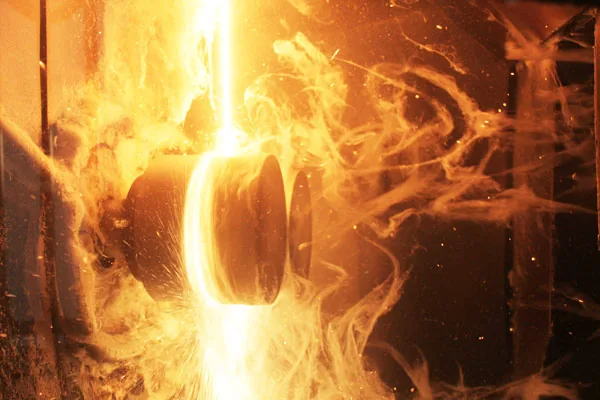
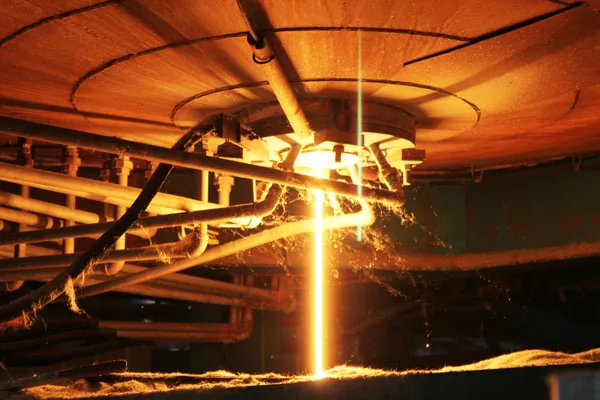
A ceramic fiber cotton line — also called a bulk fiber line — is the upstream stage that melts raw material and converts it into loose ceramic fiber. It stops before any forming step. What it produces is the raw fiber that feeds every downstream product: blanket, board, modules, paper and loose-fill insulation.
Because it is the shared feedstock stage, the cotton line sets a quality ceiling for everything downstream. Fiber diameter distribution, shot content and lubrication behavior are all decided here, and no amount of downstream needling or forming will recover them. That is why we treat the fiberising section as the most important engineering decision on the whole plant.
There are two reasons to build a cotton line on its own. The first is a staged investment: start with bulk fiber, sell it to local blanket or board makers, and add downstream forming equipment when the market justifies it. The second is captive supply — a plant that already runs blanket or board lines adds melting and fiberising capacity to stop buying bulk fiber at a markup.
| Annual Capacity | 1,000 – 8,000 tons/year |
|---|---|
| Classification Temperature | 1260°C / 1350°C / 1430°C / 1600°C |
| Fiber Diameter | 2 – 5 μm (spun) |
| Shot Content | < 15% spun, higher for blown |
| Fiberising Method | Spinning / blowing (selectable or combined) |
| Melting Furnace | Electric arc / resistance, water-cooled shell |
| Specific Energy Use | Approx. 1.0 – 1.6 kWh per kg fiber |
| Collection | Cyclone + settling chamber + bag filter |
| Control System | PLC + HMI + SCADA |
| Power Supply | 380V/50Hz/3Phase (customizable) |
How a ceramic fiber cotton production line runs from raw material to finished product
Where the output of this line is used
Blown or packed insulation for irregular cavities, furnace tops and expansion joints.
Direct pneumatic transfer to blanket, board, module or paper forming equipment.
Baled bulk fiber sold to blanket and board manufacturers without their own melting capacity.
Engineering decisions that show up in your daily operating cost
Spinning and blowing produce materially different fiber. We will tell you which grades each route can and cannot reach before you commit capital.
Shot content is the single largest driver of downstream needle wear and blanket surface quality. Removing it at the source costs less than replacing needles.
If you plan to add blanket or board capacity in phase two, we reserve space, power and conveying routes now rather than retrofitting around live equipment.
Common questions before ordering a ceramic fiber cotton production line
Other production lines we build
Technical guides and buyer resources
Send us your capacity requirement and product specifications for a tailored proposal.
Get a Free Quote