
Folding, compression and strapping equipment for furnace lining modules
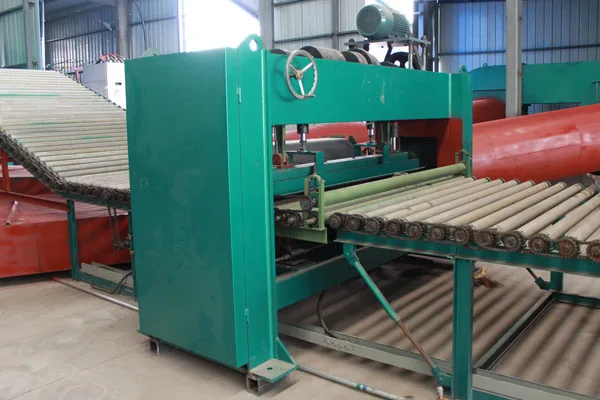
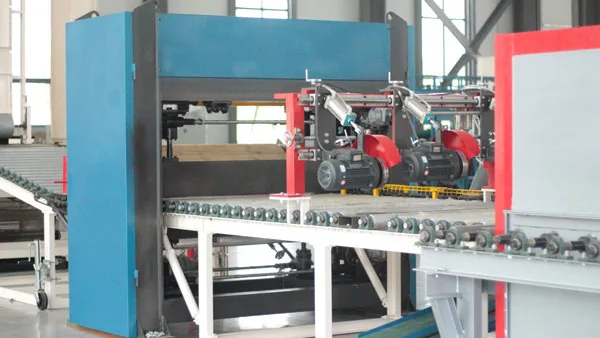
Ceramic fiber modules are pre-compressed blocks of folded blanket, fitted with an anchoring system and installed as a furnace lining in a single operation. Module equipment is a conversion stage, not a fiber-making stage: it takes finished ceramic fiber blanket and converts it into folded, compressed, strapped units ready for installation.
The core of the line is the folding and compression machine. Blanket is accordion-folded to a set number of layers, compressed to a target density, fitted with anchors or a backing plate, strapped or banded to hold compression, and then wrapped for shipping. Compression ratio is the controlling parameter — it determines both the installed density and the recovery force that keeps the module tight against the furnace shell after the straps are cut.
This is the highest-margin conversion in the ceramic fiber product family and the smallest capital step, which is why it is usually the first downstream investment a blanket producer makes. Configurations range from a semi-automatic single-station folder to a fully automatic line with robotic handling and palletising.
| Module Types | Folded blanket module, Z-block, edge-grain block |
|---|---|
| Module Size | 300×300mm standard (customizable) |
| Module Thickness | 100mm – 300mm |
| Compressed Density | 160 – 240 kg/m³ (per design) |
| Compression Method | Hydraulic, programmable multi-stage |
| Strapping | Steel / PET band, automatic tensioning |
| Anchor Options | Hidden anchor, centre bolt, plate-mounted |
| Cycle Time | Approx. 40 – 90 s per module (configuration dependent) |
| Automation | Semi-automatic to fully automatic with palletising |
| Control System | PLC + HMI with recipe storage |
| Power Supply | 380V/50Hz/3Phase (customizable) |
How a ceramic fiber module production equipment runs from raw material to finished product
Where the output of this line is used
Pre-compressed lining modules for heat treatment, forging and reheating furnaces.
Anchored module systems for tunnel and shuttle kiln hot faces.
Module linings in reformers and process heaters where installation speed matters.
Engineering decisions that show up in your daily operating cost
Programmable multi-stage compression with stored recipes keeps module-to-module density consistent, which is what your customer sees as uniform lining behaviour after burn-off.
A miscounted layer produces a module that either will not reach target density or will not install. Automatic counting and rejection removes that failure mode.
Start semi-automatic and add handling, strapping and palletising later. The control system is the same, so automation is an addition rather than a replacement.
Common questions before ordering a ceramic fiber module production equipment
Other production lines we build
Technical guides and buyer resources
Send us your capacity requirement and product specifications for a tailored proposal.
Get a Free Quote