
Vacuum forming and CNC machining for custom preformed ceramic fiber shapes
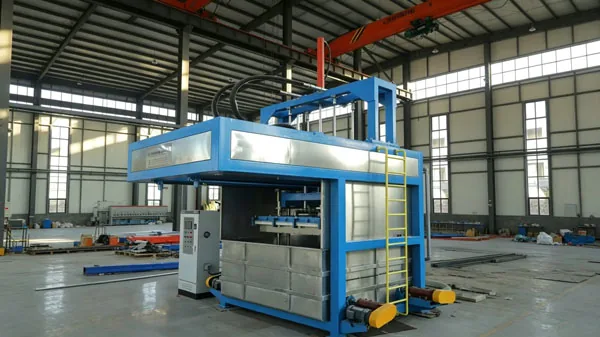
Shaped parts are preformed ceramic fiber components made to a specific geometry: pipe sections, cone adapters, furnace door linings, burner blocks, crucible supports and custom mouldings. The production route is vacuum forming from a fiber slurry — closely related to board production — followed by drying and, where tolerances demand it, CNC machining.
This is the most customised product in the ceramic fiber family. Tooling is made per shape, so the economics depend on volume per shape rather than total tonnage. A plant running a handful of shapes at volume does very well; a plant quoting one-off shapes for every enquiry will spend more on tooling and setup than it recovers.
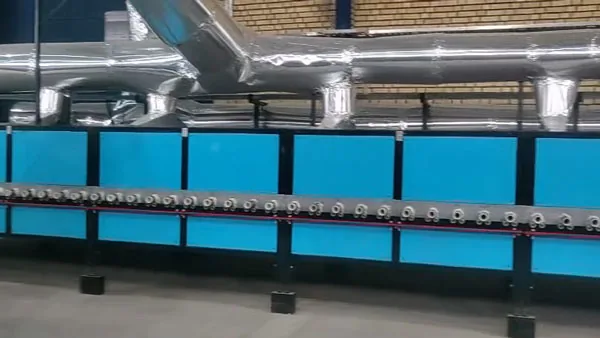
Equipment scope covers slurry preparation, a vacuum forming station with interchangeable tooling, drying, and a CNC machining centre for tight-tolerance parts. We supply the equipment and the tooling design support; tooling itself is quoted per shape from your drawings.
| Forming Method | Vacuum forming from fiber slurry |
|---|---|
| Classification Temperature | 1260°C / 1350°C / 1430°C |
| Density Range | 200 – 500 kg/m³ |
| Typical Shapes | Pipe sections, cones, blocks, door linings, custom |
| Max Formed Size | Per tooling design |
| Dimensional Tolerance | ±1mm formed, ±0.3mm after CNC |
| Machining | 3-axis / 5-axis CNC (configuration dependent) |
| Drying | Batch or tunnel dryer |
| Tooling | Per-shape, quoted from drawings |
| Control System | PLC + HMI |
| Power Supply | 380V/50Hz/3Phase (customizable) |
How a ceramic fiber shaped parts equipment runs from raw material to finished product
Where the output of this line is used
Preformed pipe sections and vessel segments for high-temperature process lines.
Custom door linings, burner blocks and observation port assemblies.
Preformed crucible supports, ladle linings and pouring spouts.
Engineering decisions that show up in your daily operating cost
We design tooling for consistent draw and release, which is where most shaped-parts quality problems originate. Poor tooling shows up as thin spots and cracking at the draw.
CNC is specified only for parts that need it. Formed tolerance of about ±1mm is fine for most insulation shapes, and machining everything is a cost you do not recover.
Process water is recovered at the vacuum station and returned to slurry preparation, cutting both water consumption and effluent volume.
Common questions before ordering a ceramic fiber shaped parts equipment
Other production lines we build
Technical guides and buyer resources
Send us your capacity requirement and product specifications for a tailored proposal.
Get a Free Quote