

Lightweight flexible felt manufacturing — low-density material for wrapping, gasketing and barrier applications
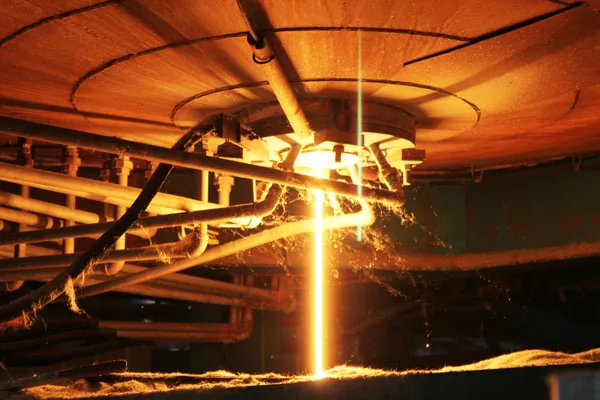
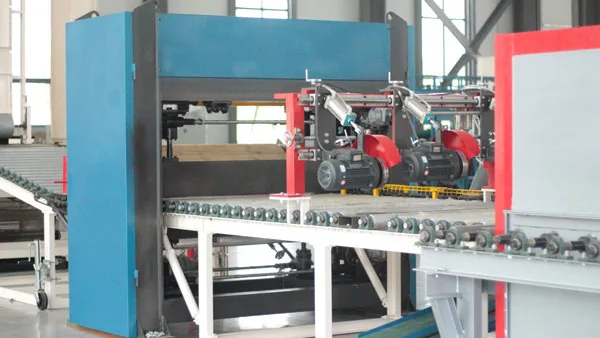
Ceramic fiber felt is the lightweight, highly flexible end of the needled product family. It is made on essentially the same route as blanket — fiberising, forming, needling — but at lower basis weight with a lighter needling pattern, which leaves the sheet soft and drapeable instead of dense and self-supporting.
That softness is the product. Felt is used where the material has to conform to a curved or irregular surface: wrapping pipe runs, lining irregular cavities, forming gasket stock, or acting as a thermal barrier behind a hot-face material. It will not hold shape or carry load, and specifying it where board is required is the most common application error we see in incoming inquiries.
Because the process is close to blanket, we often supply felt capability as part of a blanket line rather than as a separate installation — a wider density operating window on the forming section and an additional needle pattern let one line serve both markets. Whether that is the right answer depends on your volume split between the two products.
| Annual Capacity | 500 – 3,000 tons/year |
|---|---|
| Classification Temperature | 1260°C / 1350°C / 1430°C |
| Felt Thickness | 3mm – 25mm |
| Bulk Density | 96 – 200 kg/m³ |
| Roll Width | 610mm / 1220mm (customizable) |
| Fiber Diameter | 2 – 5 μm |
| Forming | Pendulum laying, low basis weight |
| Needling | Light-density needle pattern (separate from blanket) |
| Binder Option | Needled, or binder-impregnated on request |
| Control System | PLC + HMI |
| Power Supply | 380V/50Hz/3Phase (customizable) |
How a ceramic fiber felt production line runs from raw material to finished product
Where the output of this line is used
Conformable insulation wrap for high-temperature piping, exhaust ducts and irregular geometries.
Die-cut gasket material for furnace doors, access hatches and expansion joints.
Flexible barrier layers in appliance, kiln and heat-shield assemblies.
Engineering decisions that show up in your daily operating cost
Where volumes justify it, we widen the density window and add a second needle pattern so a single installation serves both markets instead of standing idle.
Felt needs a different needle gauge, barb geometry and penetration depth than dense blanket. Running felt on blanket settings produces a stiff, overworked sheet.
Slit width sets are specified from your actual product list, so converting between formats does not require retooling.
Common questions before ordering a ceramic fiber felt production line
Other production lines we build
Technical guides and buyer resources
Send us your capacity requirement and product specifications for a tailored proposal.
Get a Free Quote