
Ask three suppliers for a “ceramic fiber braiding machine” and three different machines arrive: one named by a carrier count, one by a rotor diameter, one by a posture word like inverted or vertical. All three braid, and the differences between them are not cosmetic — they decide what cross-section the machine can make, what diameter it can reach, whether your operators breathe fiber dust, and how fast the packing comes off. This page is the classification map: eight dimensions, the order they nest in, and the navigation path that turns a product list into a machine specification.
On sourcing of the figures below: catalogue tables quoted from public maker documentation are marked industry reference; rows from our own 336-series line are marked machine example (†) and must be calibrated against the actual machine. Where a public catalogue figure contradicts itself we say so and leave it out of the tables. The pattern mechanics behind the structures named here live on our braid structure page; the generations these machines descend from, on the braider history page.
One Name, Eight Dimensions
A braiding machine is not a model but a family crossed along eight axes. They are not equal axes, and treating them as a flat checklist is where mis-specification starts:
The eight classification dimensions of a braiding machine
| Dimension | Splits into | Role in the machine |
|---|---|---|
| 1. Product cross-section | Round / square / flat braider | Decides the mechanism topology — the first decision |
| 2. Carrier count | 8 to 96, up to 144 | The size identifier; sets the diameter band with the rotor |
| 3. Carrier posture | Vertical / inverted / horizontal | Frame and carrier-seat design; dust behaviour |
| 4. Track count | Two / three / four orbits | Frame and carrier-seat design; which structures are possible |
| 5. Speed class | Conventional / high-speed | Performance tier; shows up in bobbin tube length |
| 6. Enclosure | Open (discontinued) / enclosed | Frame design; dust and noise control |
| 7. Drive | Gearbox / mechanical variator / inverter / servo | Performance tier; how speed and density are adjusted |
| 8. Braiding structure | Braid / sleeve / sandwich / through-core | The process result the deck is built to produce |
Read the table as a dependency order, not a list. Cross-section decides the topology; carrier count, posture, track count and enclosure together decide the frame and the carrier seats; speed and drive are performance tiers bought on top; structure is the outcome the whole machine exists to produce. Selection therefore starts at dimension 1, fixes dimension 2 next, and lets the rest converge on capacity and working conditions.
Dimension 1 — Cross-Section: Round, Square, Flat
The first fork is the shape of the finished product, because each shape needs a different deck and carrier arrangement:
Cross-section families and where each wins
| Family | Product | Where it wins |
|---|---|---|
| Round braider | Round rope, sleeves, round-section packing | Rope and sleeve products; large-diameter round sections |
| Square braider | Square packing, square rope | Gland packing in rectangular stuffing boxes — the mainstream |
| Flat braider | Flat tape, flat-section rope | A narrow branch; confirm availability per project |
Square braid dominates gland packing for a structural reason, not a traditional one: the four-strand interlock of a square braid produces flat sides, and flat sides sit stable in a rectangular stuffing box where a round braid rolls and corners leak (industry reference). Round machines keep their own large territory — rope, sleeving and round-section products — and the two decks are different machines, not two settings on one machine. Flat braiding is the thin third branch: real products exist, but public catalogue coverage is sparse, so we quote it project by project rather than from a standing model.
Dimension 2 — Carrier Count: The Size Identifier
Carrier count is the number a braider is introduced by, and for good reason: together with the rotor it bounds the diameter the machine can braid. One public catalogue (industry reference) shows how count, diameter and speed move together:
Carrier count against braiding diameter and speed (maker catalogue, industry reference)
| Carriers | Braiding diameter (mm) | Spindle speed (r/min) | Line speed (m/h) |
|---|---|---|---|
| 20 | 6–13 | 19.8 | 15–34.5 |
| 24 | 10–31 | 14.25 | 21–66 |
| 36 | 15–45 | 10 | 22–66 |
| 48 | 30–75 | 7.25 | 29–72 |
| 64 | 51–110 | 4.56 | 18.6–102 |
| 72 | 80–150 | 4.25 | 44–83 |
| 96 | 150–400 | 2.75 | 50–120 |
Two things fall out of this table. First, carrier count and spindle speed move in opposite directions: the 96-carrier machine turns its spindles at a fraction of the 20-carrier machine's speed, because a large braid consumes yarn faster per revolution. A quotation that promises both a huge carrier count and a high spindle speed is describing two different machines. Second, the braid angle column in the same catalogue is constant at 54°44′ across every count — the angle is not a machine property but a setting your take-up speed chooses, which is the subject of our braid angle and pitch page.
Count also predicts which braiding structures the deck can carry, because structure and track count arrive together:
Carrier count against structure and typical product
| Carriers | Usual structure | Typical product |
|---|---|---|
| 8 | Braid, two tracks | Small square packing, 3×3 to 8×8 mm |
| 12 / 16 | Sleeve or through-core | Small and medium sections |
| 18 / 24 | Inverted square braid | 12–50 mm packing |
| 32 | Four-track through-core | 25–60 mm packing — our main line |
| 36 and above | Sleeve or through-core | Large-diameter round rope, oversized sections |
The Rotor Diameter Rule: Why Model Numbers Lie
The single most expensive misunderstanding in braider purchasing is reading the model number as a carrier count. Foreign catalogues state the design criterion plainly: the horngear — the rotor — diameter sets the maximum braiding diameter. Model numbers therefore tend to name rotor sizes, not carrier counts (industry reference):
Model number against rotor diameter and capacity (maker catalogue, industry reference)
| Model | Carriers | Rotor diameter | Max square section |
|---|---|---|---|
| PB-24V | 24 | 650 mm | 10 mm (3/8″) |
| PB-48V | 48 | 1,000 mm | 19 mm (3/4″) |
| PB-64H | 64 | 1,200 mm | 25 mm (1″) |
| PB-96V | 96 | 1,500 mm | 38 mm (1.5″) |
| PB-144T | 144 | Track-type deck | 50 mm and above (2″+) |
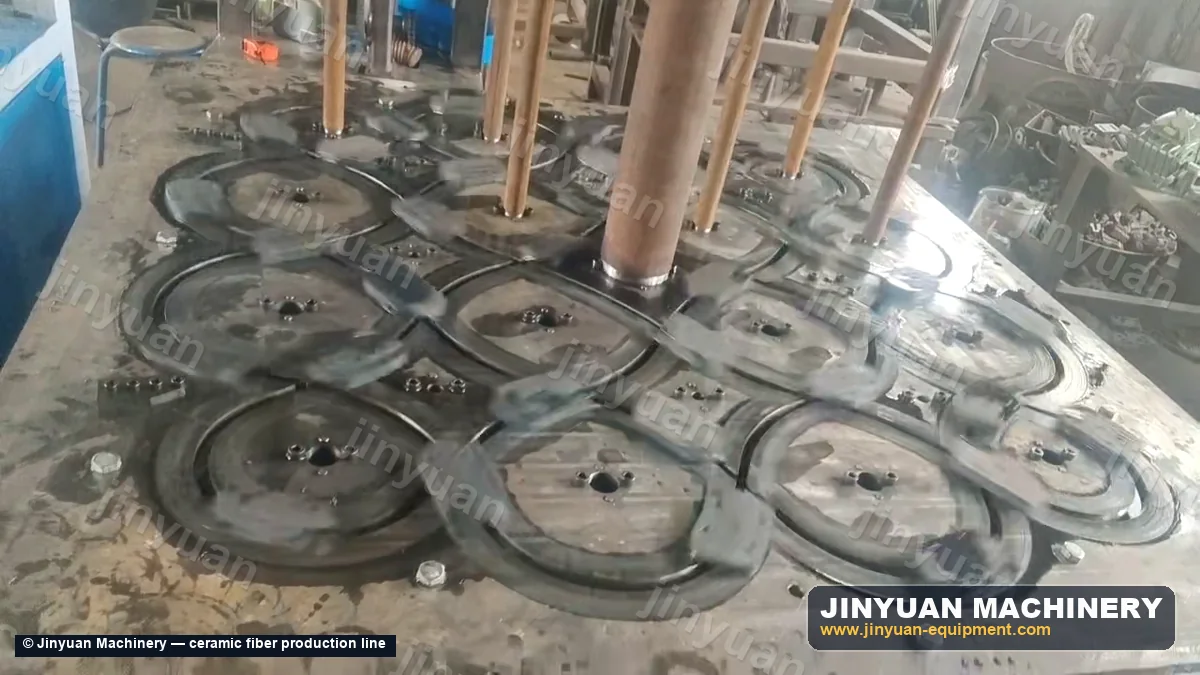
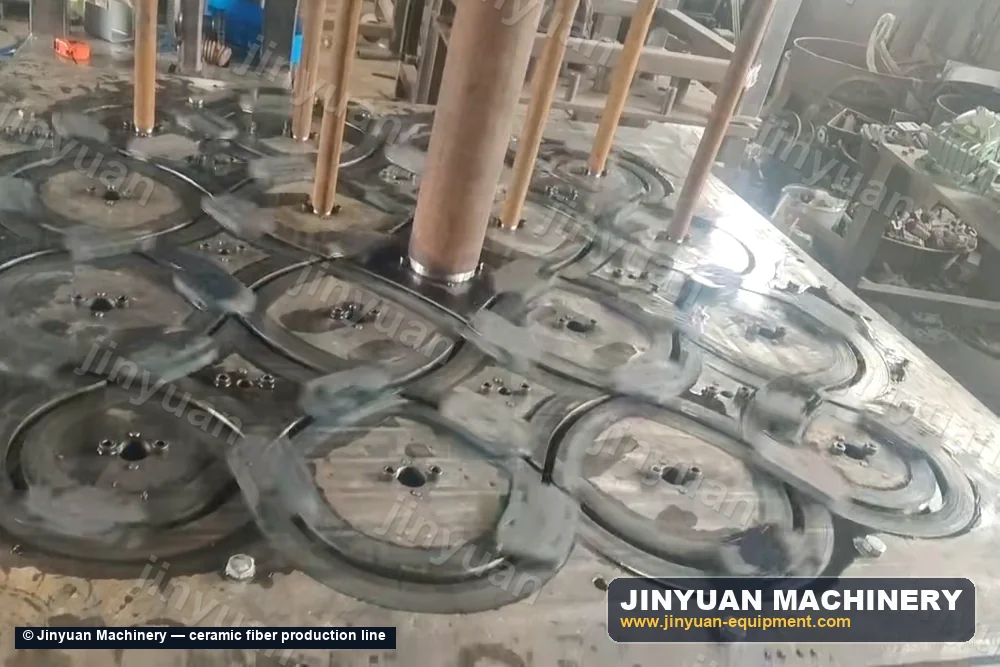
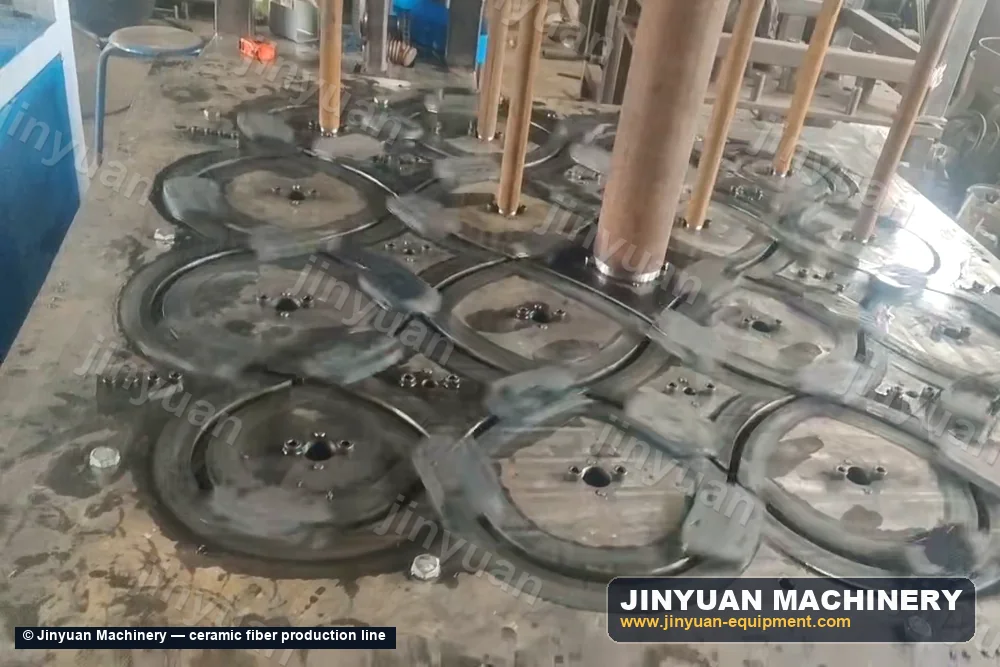
The practical rule: ask any quotation for both numbers — carrier count and rotor diameter — and check them against your largest product before comparing prices. A machine whose rotor cannot swallow your 50 mm packing is not a cheap machine for your product; it is the wrong machine at any price. The deck in the photographs on this page is exactly the part the rule refers to: the plate of interlocking horn gears whose diameter bounds the braid.
Dimension 3 — Carrier Posture: Vertical, Inverted, Horizontal
Posture describes where the carrier seats sit and which way the braid leaves the deck:
The three carrier postures
| Posture | Geometry | Strength | Cost |
|---|---|---|---|
| Vertical | Seats below, carriers upright, braid rises | Simple structure, easy threading and service | Dust rises into the yarn path and the operator's zone |
| Inverted | Seats above, carriers hang, braid descends | Tighter, more even braid; dust falls away; encloses cleanly | More complex frame; threading takes longer |
| Horizontal | Axis horizontal | Suits long products and in-line connection | Rare in packing; at home in wire and cable braiding |
For ceramic fiber the posture question is a dust question before it is a textile question. Ceramic fiber dust is classified IARC group 2B, so the direction dust travels is an occupational-health decision: on a vertical machine it rises through the yarn path and into the room, on an inverted machine it falls away from both. Inverted carriers also braid tighter and more evenly, and — decisively — an inverted deck is the one that encloses cleanly, which is why the inverted enclosed square braider is the mainstream of modern packing lines and why one established maker states that its open machines are discontinued entirely, with spares supplied only to existing customers.
Dimension 4 — Track Count: Two, Three, Four
The tracks are the serpentine orbits carriers ride across the horn-gear plate; the count decides how often strands cross, and therefore which structures the deck can produce:
Track count against mechanism and structure
| Tracks | Mechanism | Common carriers | Structures served |
|---|---|---|---|
| Two | Two ring orbits, carriers counter-rotating | 8 / 12 / 16 / 24 | Braid and sleeve |
| Three | Three orbits, more crossings | 8 to 60 | Through-core |
| Four | Four orbits, densest interlacement | 24 / 32 | Through-core — the better large-section packing deck |
Public technical material rates the four-track, 32-carrier arrangement as the better packing braid, and that matches the configuration our own main line runs: 32 carriers on four tracks, inverted, square. The horn-gear mechanics — how a carrier is handed from rotor to rotor at every crossing — are explained on the braid structure page; here the point is only that track count is a structural commitment made at order time, not an adjustment.
Dimension 5 — Speed: The Bobbin Tube Tells
Speed classes are quoted in line speed, but the honest tell is hardware: the bobbin tube length a carrier accepts (industry reference unless marked):
Speed class, line speed and the bobbin-tube tell
| Class | Line speed | Bobbin tube (length × diameter, mm) |
|---|---|---|
| Conventional, vertical | 0.2–0.4 m/min | 190 × 70 |
| High-speed, inverted | 0.5–1.2 m/min | 280 × 70 |
| Conventional, our line † | 200–260 m per 8 h shift | 70 diameter × 165 long |
The cross-check works in both directions. A machine offered as high-speed but carrying short tubes is a conventional machine with a fast name; our own 336-series tubes at 165 mm place it honestly in the conventional inverted class — built for stable packing density rather than for line-speed records, which is what gland packing actually pays for. Long tubes mean long uninterrupted runs and higher line speed; they also mean taller carriers and a larger frame, so the speed class is bought with steel, not with a parameter.
Dimension 6 — Enclosure: Open Machines Are Dead
This dimension has only one acceptable answer in ceramic fiber work. An open braider — no doors, no panels — throws fiber dust and noise into the room; the enclosed machine wraps the deck in an aluminium-framed, tempered-glass cabin with a door-open interlock that stops the drive. Given the IARC 2B classification of ceramic fiber dust, the enclosure is the first engineering control on the machine, ahead of ventilation and personal protection, and it is the reason enclosure travels together with posture in the classification: the inverted deck is the one a cabin fits cleanly. The market has already voted — open machines are discontinued by established makers — so an open braider offered today is either old stock or a machine built for a different fiber. Our safety requirements for the line are set out on the safety page; the same dust logic applies at the braider.
Dimension 7 — Drive: Gearbox, Inverter, Servo
The drive dimension decides how speed and braid density are adjusted, which is to say how much of the machine's behaviour lives in gears and how much in software:
Drive tiers and what each adjusts
| Drive | Speed control | Density adjustment | Typical home |
|---|---|---|---|
| Mechanical geared | Change gears | Change gears | Early verticals |
| Mechanical variator | Stepless variator | Mechanical stepless | Older verticals |
| Inverter + synchronous | Inverter stepless | Stepless take-up + inverter | Inverted high-speed; our 336 † |
| Servo | Servo, closed loop | Programmed | High-end wire braiders |
Our 336 series runs the split-control version of the inverter tier †: the main drive holds a constant 25 r/min so the braiding point never wanders, while the take-up has its own stepless speed control, and it is the take-up that trims braid density and tightness. Constant main speed for stability, independent take-up for density — the division of labour is the point, and it is worth asking any supplier which control does which job on their machine.
Dimension 8 — Braiding Structure: Braid, Sleeve, Sandwich, Through-Core
The last dimension is the pattern the deck produces, and it is the dimension the customer's seal actually experiences (industry reference):
The four braiding structures
| Structure | Tracks and carriers | Core | Character and limit |
|---|---|---|---|
| Braid (plait) | 2 tracks, 8 carriers | None | Loose; absorbs vibration and eccentricity; small sections only |
| Sleeve (layered) | 2 tracks, 8–60 carriers | None | One to four dense layers, good sealing; layers unbonded, can delaminate |
| Sandwich | Design-dependent | Rubber or metal core | Strong and flexible; surface layer can shed once worn |
| Through-core | 3 or 4 tracks, 8–60 carriers | None | Flat surface, integral body, long life — rated the better packing structure |
Through-core earns its rating the way four-track decks earn theirs: strands locked through the section instead of layered around it give a flat, integral braid that does not loosen in service. The notation, the cover factor and the horn-gear train that produce each structure are the subject of the braid structure page; in the taxonomy the point is that structure is chosen with track count and carrier count as one package, at order time.
The Selection Order: Cross-Section First, Carrier Count Second
The eight dimensions collapse into a navigation path short enough to run on a quotation sheet:
- Fix the cross-section. Square for gland packing, round for rope and sleeves, flat only with a confirmed model — this chooses the deck family.
- Fix the size band, then the count. 3–8 mm small square packing points to an 8-carrier two-track braid deck; the 12–50 mm mainstream to a 24–36-carrier inverted square machine; 25–60 mm high-density packing to the 32-carrier four-track inverted deck; round work to 12–24 carriers sleeve for small and medium sections and 36–64 carriers through-core for large ones.
- Check the rotor diameter against your largest product before any price comparison — the rule that model numbers do not carry.
- Take posture and enclosure as one pair: inverted and enclosed for ceramic fiber, without exception; treat an open machine as a different-fiber machine.
- Choose the speed class from the shift output you must hold, and verify it by bobbin tube length rather than by the name on the brochure.
- Choose the drive tier last, matching density-adjustment method to how often your product mix changes — a line that changes packing size weekly pays for stepless take-up control every week.
Worked product targets against machine shape
| Product target | Machine shape | Why |
|---|---|---|
| 3–8 mm square packing | 8-carrier, two-track braid deck | Braid structure absorbs vibration; small section needs few carriers |
| 12–50 mm square packing | 24–36-carrier inverted square braider | The mainstream band; inverted and enclosed for dust |
| 25–60 mm high-density packing | 32-carrier, four-track inverted through-core | The rated better packing configuration; integral braid |
| Small to medium round rope and sleeve | 12–24-carrier sleeve deck | Layered sleeve seals and sleeves round sections economically |
| Large-diameter round rope | 36–64-carrier through-core deck | Through-core holds large round sections integral |
Reading a Quotation Against the Eight Dimensions
A quotation that survives the taxonomy answers all eight axes, and the answers agree with each other. The checks that catch most bad quotations:
- Both size numbers present: carrier count and rotor diameter, checked against your largest product — a missing rotor diameter is the most common omission and the most expensive.
- Posture and enclosure paired: inverted with an enclosed cabin and door interlock for ceramic fiber; either half missing is a dust problem waiting.
- Speed class evidenced by hardware: bobbin tube length quoted, not just a line-speed claim.
- Track count consistent with the promised structure: through-core without three or four tracks is a brochure structure, not a machine.
- Density adjustment named: which control trims density — gears, variator, take-up inverter or program — because that answer is your changeover procedure, as our changeover page works it out.
- Yarn path hardware: tension weights, eyelets and threading order compatible with your yarn — the elements our yarn tension page traces defect by defect.
Five Misconceptions the Taxonomy Corrects
- The model number is the carrier count. It usually names the rotor diameter; the count and the rotor are two numbers and both belong on the quotation.
- More carriers mean a better machine. Count matches diameter band; spindle speed falls as count rises, so an oversized deck on a small product braids slowly and expensively.
- An open braider is acceptable with good ventilation. Open machines are discontinued by established makers; with IARC 2B dust the enclosure is the control, and ventilation is the backup.
- Vertical and inverted are the same machine in two orientations. Dust direction, braid tightness and enclosability all differ; the inverted deck is a different frame, not a flipped one.
- Braiding structure is a setting. Braid, sleeve, sandwich and through-core are deck commitments — track count and carrier arrangement built in steel at order time.
What We Deliberately Do Not Claim
Three boundaries. The catalogue tables are industry reference values quoted from public maker documentation to place the dimensions on the map; they are not acceptance values, and one public figure — a 150 kW motor on a 72-carrier machine whose motor frame corresponds to roughly 15 kW — is internally contradictory and is therefore left out of our tables rather than repeated. The 336-series rows marked † are machine examples from our own line, offered as a worked instance of the conventional inverted class and to be calibrated like any example. And the taxonomy is a map, not a specification: your yarn, product mix and shift targets decide where on it your machine sits, and a deck bought against the wrong dimension cannot be converted cheaply afterwards.
The Bottom Line
A braiding machine quoted by one number is a machine misunderstood. The eight dimensions — cross-section, carrier count, posture, track count, speed, enclosure, drive and structure — nest in a fixed order, and the order is the selection method: cross-section chooses the family, carrier count and rotor diameter choose the size, posture and enclosure choose whether the machine can live in a ceramic fiber room at all, and speed, drive and structure choose how well it earns its floor space. Read every quotation against all eight, in that order, and the family stops being a naming argument and becomes a specification — which is exactly what a packing line needs before the first bobbin is threaded.
Frequently Asked Questions
What are the main types of ceramic fiber braiding machine?
They split first by product cross-section into round braiders, square braiders and flat braiders, and then along seven further dimensions: carrier count, carrier posture (vertical, inverted, horizontal), track count (two, three, four), speed class, enclosure, drive and braiding structure. For ceramic fiber gland packing the mainstream machine is the inverted, enclosed square braider; round braiders serve rope and sleeve products.
What does the carrier count of a braiding machine mean?
It is the machine's size identifier: together with the rotor diameter it bounds the braiding diameter the deck can produce. Common counts run 8, 12, 16, 18, 24, 32, 36, 48, 64, 72 and 96, up to 144 on track-type decks. Count also predicts the structures the deck can carry — 8 carriers for small braid-section packing, 32 on four tracks for through-core packing, 36 and above for large round rope.
Is the model number of a braider its carrier count?
Usually not. Maker catalogues state that the horngear (rotor) diameter sets the maximum braiding diameter, so model numbers tend to name rotor sizes — 336, 650, 1000, 1500 mm — rather than carrier counts. Ask any quotation for both numbers, carrier count and rotor diameter, and check the rotor against your largest product before comparing prices.
Why are inverted braiding machines preferred for ceramic fiber packing?
Because of dust direction and braid quality together. On an inverted deck the carriers hang and the braid descends, so fiber dust — an IARC group 2B material — falls away from the yarn path and the operator instead of rising through both, and the inverted frame is the one an enclosed cabin fits cleanly. Inverted carriers also braid tighter and more evenly. Open machines are discontinued by established makers for exactly this reason.
How many tracks does a packing braiding machine need?
It follows the braiding structure: braid and sleeve structures run on two tracks, through-core on three or four. Public technical material rates the four-track, 32-carrier arrangement as the better packing braid, which matches our own main line. Track count is a deck commitment made at order time, so a through-core promise without three or four tracks is not a machine.
What is the difference between a round and a square braiding machine?
The cross-section of the product and the interlock that produces it. A square braid's four-strand interlock gives flat sides that sit stable in a rectangular stuffing box, which is why gland packing is predominantly square-braided; a round braid rolls in the same box. Round machines keep rope, sleeving and round-section products. The two are different decks, not two settings on one machine.
How can I tell a high-speed braider from a conventional one?
By the bobbin tube length the carriers accept, not by the brochure name. High-speed inverted machines take tubes around 280 mm long against about 190 mm on conventional vertical machines; our own conventional inverted line runs 165 mm tubes, which places it honestly in the conventional class. Long tubes mean long uninterrupted runs and higher line speed, bought with a larger carrier and frame.